

40 Fun Facts About Istanbul: The Only City That Straddles Two Continents
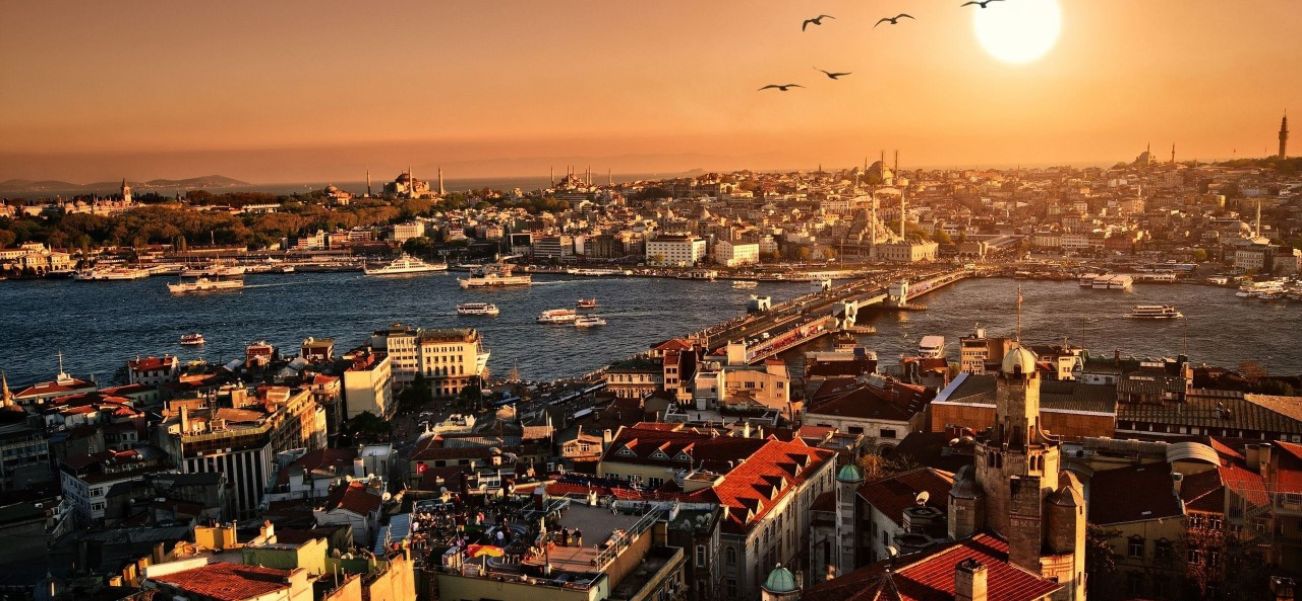
Istanbul is not just another city. It is a living, breathing tapestry of empires, cultures, and seismic energy. As one of the top travel destinations in the world, it defies simple description. Is it European or Asian? Ancient or modern? Religious or secular? The answer is always “yes.”
For centuries, Istanbul has served as the bridge (literally and figuratively) between East and West. From the Byzantine glow of Hagia Sophia to the Ottoman grandeur of the Blue Mosque, and from the bustling spice markets to the chic rooftop bars of Beyoğlu, this city offers an endless parade of surprises.
Whether you are planning a trip to Turkey or simply want to impress your friends with world-class trivia, here are 40 fun, fascinating, and mind-boggling facts about Istanbul that reveal the persona of this magnificent metropolis.
40 FUN FACTS ABOUT ISTANBUL

Location & Geography: Where East Meets West
1. The Only City on Two Continents
Istanbul is the only city in the world built on two continents: Europe and Asia. The Bosphorus Strait splits the city in half. Imagine waking up in Europe, commuting to work in Asia via a 15-minute ferry ride, and having lunch back in Europe. This geographical duality defines the city’s identity.
2. A Decisively Crucial Location
Istanbul is nestled at a decisively crucial location historically and militarily. It controls the passage between the Black Sea (leading to Russia and Ukraine) and the Mediterranean Sea. Whoever controlled Istanbul, controlled the trade routes of the ancient world. This is why emperors and sultans fought so hard for it.
3. A Coastal Metropolis with 85 Beaches
While most people think of Istanbul as a concrete jungle, it is actually a coastal city with a surprising number of beaches. There are about 85 approachable beaches within the city limits. Locals escape the summer heat by heading to the Princes’ Islands or the Black Sea coast for swimming and fresh fish.
4. The Golden Horn: A Natural Harbor
The Golden Horn ("Haliç" in Turkish) is a large estuary that splits the European side of Istanbul. It got its name from the yellowish hue that reflected off the water at sunset when the city walls were still intact. It served as a natural, sheltered harbor for Byzantine and Ottoman navies for over 1,500 years.
5. Turkey’s Primary Seaport
Istanbul is Turkey’s largest city and its primary seaport. The Port of Istanbul handles millions of tons of cargo and welcomes hundreds of cruise ships every year. It is the economic engine of the nation, generating more than 30% of Turkey’s GDP.
Demographics & Districts: A City of Millions
6. 39 Distinct Districts
Istanbul is administratively divided into 39 districts. Each one feels like its own small town. For example, "Fatih" is the conservative, historic heart (home to the mosques), while "Beyoğlu" is the modern, artsy, and nightlife hub. "Kadıköy" on the Asian side is the hipster paradise.
7. The Population Explosion of 1970
The population of Istanbul experienced a massive upsurge in the 1970s. During this decade, millions of Anatolians migrated from rural villages to the city seeking factory work. The population skyrocketed from roughly 1.5 million to nearly 7 million in just 20 years. Today, the official population hovers around 16 million, but many argue it is closer to 20 million during the day.
8. A Muslim-Majority City with Nuance
While about 99% of the population is officially Muslim (mostly Sunni), Istanbul is surprisingly secular in daily life. You will see women in headscarves praying next to women in crop tops drinking beer at a rooftop bar. The city respects the call to prayer, but it also thrives on nightlife.
9. Inhabited Since the Stone Age
Humans have lived in the area known as Istanbul today since the Stone Age. Archaeological digs near the Yenikapı district have unearthed Neolithic (New Stone Age) skeletons, footprints, and tools dating back 8,500 years. Before it was a city, it was a prehistoric fishing village.
History & Names: From Byzantium to Istanbul
10. Three Names, One City
For ages, Istanbul has been called by different names. The Greeks founded it as Byzantium (667 BC). The Romans renamed it Constantinople (AD 330). Finally, the Turks popularized Istanbul. The name “Istanbul” likely comes from the Greek phrase “eis tin polin” meaning “to the city.” The Turks simply called it “The City.”
From Byzantion to Istanbul: The Historic Names of Istanbul, World’s Most Layered City
11. The Conquest of 1453
Constantinople was conquered in 1453 by the Ottoman Sultan Mehmed II, known as Mehmed the Conqueror. At just 21 years old, he breached the legendary Theodosian Walls using massive cannons and the shocking tactic of dragging ships overland on greased logs. This event marked the end of the Middle Ages.
12. 1,600 Years as an Imperial Capital
For over 1,600 years (from 330 AD to 1922 AD), Istanbul functioned as an imperial capital city. First for the Roman/Byzantine Empire, then for the Ottoman Empire. Very few cities in history—Rome being the other—have held power for that long consecutively.
13. The Golden Age of Süleyman the Magnificent
Under the longest-reigning Ottoman sultan, Süleyman the Magnificent (1520-1566), Istanbul flourished in art, architecture, and law. He commissioned the architect Mimar Sinan (the “Michelangelo of the East”) to build the Süleymaniye Mosque, a masterpiece of acoustics and light that rivals the Hagia Sophia.
Architecture & Landmarks: Icons of the Skyline
14. Hagia Sophia: The Dome of Holy Wisdom
Istanbul is home to one of the most renowned pieces of architecture in human history: Hagia Sophia ("Holy Wisdom"). Built in 537 AD by Emperor Justinian, it was the world’s largest cathedral for nearly 1,000 years. It has been an Eastern Orthodox cathedral, a Roman Catholic cathedral, an Ottoman mosque, a museum, and recently (2020) a mosque again. The massive dome seems to float on light.
Hagia Sophia: The Timeless Symbol of Istanbul's Spiritual and Imperial Legacy
15. The Blue Mosque’s Six Minarets
Another world-famous architectural site is the Sultan Ahmed Mosque, better known as the **Blue Mosque** (named for the 20,000 handmade blue Iznik tiles inside). It caused a scandal when built because it had six minarets. At the time, only the Grand Mosque in Mecca had six. The Sultan solved the problem by paying for a seventh minaret in Mecca.
The Blue Mosque, Istanbul: A Complete Guide to History, Architecture, and Visiting Tips
16. The Medieval Skyscraper: Galata Tower
One of the city’s most iconic structures, the Galata Tower, was constructed in 1348 by the Genoese (Italian merchants). At 67 meters (219 feet), it was the tallest building in the city for centuries. Legend says that Hezarfen Ahmet Çelebi strapped on wings and flew from this tower across the Bosphorus to Asia in the 17th century.
17. Over 60 Historic Turkish Baths
There are beyond 60 historic hammams (Turkish baths) in Istanbul. The most famous, the Çemberlitaş Hamamı, was designed by Mimar Sinan in 1584. A traditional hammam isn’t just a shower; it involves a marble hot plate ("göbek taşı"), a vigorous scrub by a "tellak", and a foam massage that leaves you like a noodle.
Turkish Bath (Hammam) Explained: History, Atmosphere, Layout & Ritual
18. The Underground Cities: Cisterns
Hundreds of water cisterns lie below Istanbul. The largest is the Basilica Cistern (Yerebatan Sarnıcı), which can hold 80,000 cubic meters of water. It is supported by 336 marble columns, many recycled from older Roman temples. Two columns have the head of Medusa carved at their base—one upside down, one sideways.
The Basilica Cistern: A Hidden Gem Beneath Istanbul's Bustling Streets
19. The Hippodrome of Constantinople
Sultanahmet Square was once the Hippodrome of Constantinople—a massive chariot-racing stadium that held 100,000 spectators. That is bigger than the Colosseum in Rome. Today, it is a park, but you can still see three ancient monuments: the Egyptian Obelisk (3500 years old), the Serpent Column, and the Walled Obelisk.
20. Topkapı Palace: Home to the Sultan
The former residence of Ottoman sultans, Topkapı Palace, is a vast museum visited by thousands of tourists every year. It is a city within a city. The palace once housed 5,000 people and had its own schools, hospitals, and even a zoo. The Imperial Harem alone has over 400 rooms.
Topkapi Palace: Istanbul's Iconic Museum
21. The Bronze Horses of San Marco
The San Marco Cathedral in Venice embraces four bronze horses that were taken from Constantinople during the Crusades (specifically the Fourth Crusade in 1204). These gilded horses once stood above the starting gates of the Hippodrome of Constantinople. Venice refuses to give them back.
Shopping & Transport: The Oldest and the Largest
22. The Grand Bazaar: A Shopping City
The Grand Bazaar ("Kapalıçarşı") in Istanbul is regarded as one of the most famous attractions in the world—and one of the oldest. Built in 1461, it has over 4,000 shops spread across 61 covered streets. It employs roughly 25,000 people. Do not go without a map; you will get lost in the labyrinth of carpets, gold, and spices.
Grand Bazaar Istanbul: A 550-Year-Old Shopping Mall & Cultural Heart Of Istanbul
23. The Spice Bazaar (Egyptian Bazaar)
While the Grand Bazaar sells everything, the Spice Bazaar ("Mısır Çarşısı") is for the nose. Built in 1664, it smells of cinnamon, caraway, saffron, and mint. Legend has it that in the Ottoman era, this bazaar was funded by the taxes from Cairo (Egypt), hence its name.
24. The Tunnel: Second Oldest Subway
The Tünel (meaning “Tunnel”) was constructed in 1875 in Istanbul. It is the second-oldest urban rail line in the world, after the London Underground. It is a funicular that goes uphill from Karaköy to İstiklal Avenue. It is only 573 meters long and takes 90 seconds to ride.
25. Marmaray: The Intercontinental Tube
In 2013, Istanbul opened the Marmaray railway, a undersea tunnel connecting the European and Asian sides under the Bosphorus Strait. It is the deepest immersed tunnel in the world. You can board a train in London (via the Eurostar) and eventually get off in Asia without ever changing trains.
26. Two Major Airports
There are two significant airports serving Istanbul. The new Istanbul Airport (IST) on the European side is one of the largest in the world, designed to handle 200 million passengers annually. On the Asian side, Sabiha Gökçen Airport (SAW) is named after the world’s first female fighter pilot (and adopted daughter of Atatürk).
Culture, Food & Lifestyle: The Soul of the City
27. The Tulip Mania
The tulip is a traditional symbol of Istanbul and Turkey. However, tulips did not originate in Holland! Tulips were first cultivated in the Ottoman Empire and brought to Europe via Istanbul. In the 16th century, the “Tulip Era” ("Lâle Devri") under Sultan Ahmed III was a period of peace, art, and garden parties.
28. İstiklal Caddesi: The Beating Heart
İstiklal Caddesi in Beyoğlu is the most popular street across Istanbul and Turkey. This 1.4-kilometer pedestrian avenue is visited by nearly 3 million people a day. It features a vintage tram, 19th-century embassies, massive bookstores, and endless live music pouring out of bars.
29. The Balık Ekmek Boats
You cannot visit Istanbul without eating "Balık Ekmek" (fish bread). On the Eminönü waterfront, fishermen cook grilled mackerel on boats tied to the dock. They hand you a fish sandwich with raw onions and lettuce for about $2. It is messy, delicious, and 100% authentic.
30. Breakfast is a Ceremony
In Istanbul, breakfast ("kahvaltı") is not a quick meal. It is a two-hour feast. A typical Turkish breakfast includes: menemen (scrambled eggs with tomatoes), börek (savory pastry), sucuk (spicy sausage), honey, kaymak (clotted cream), olives, cucumbers, tomatoes, and endless tea.
Turkish Breakfast: A Complete Guide to the Ultimate "Kahvalti" Feast
31. Simit: The Bagel’s Cousin
Walking down any street, you will hear “Simit, simit! ” Simit is a circular bread encrusted with sesame seeds. It is often called the Turkish bagel, but it is thinner and chewier. You eat it with tea for breakfast or as a street snack with cheese.
32. The Whirling Dervishes
While not a dance, the "Sema" ceremony of the Whirling Dervishes is a form of physical meditation. The Dervishes wear tall hats (representing tombstones) and white robes (representing shrouds). They spin to lose their ego and connect with God. You can watch this mystical ritual in Galata every Sunday.
Whirling Dervishes of Turkey: More Than a Dance, A Journey to the Divine
33. Cat Heaven on Earth
Istanbul is famous for its stray cats. The city has a “feed, don’t trap” policy. Locals leave water bowls and leftover meat out for them. The documentary "Kedi" (2016) followed seven of Istanbul’s street cats. The most famous, Tombili, has a bronze statue in the Ziverbey neighborhood.
Turkish Van Cat: The Swimming Cat with a Dazzling Coat and a Heart of Gold
Quirky & Random Facts
34. The Underground Church
Below the district of Beyoğlu lies the Cistern of the Haghia Triada, but more interestingly, there is a massive, hidden Orthodox Church carved into a cave called St. Mary of Draperis. You would walk past the entrance 100 times without noticing it.
35. The Sweet Tooth: Aşure (Noah’s Pudding)
According to legend, when Noah’s Ark landed on Mount Ararat (in Eastern Turkey), the family had run out of food. They boiled together the few remaining ingredients: wheat, chickpeas, beans, dried fruit, and nuts. This porridge is called Aşure (Noah’s Pudding). In Istanbul, people make it in bulk and share it with neighbors regardless of religion.
36. The Maiden’s Tower Curse
There is a tower on a tiny island in the Bosphorus called the Maiden’s Tower ("Kız Kulesi"). Legend says a king put his daughter there after a prophecy that she would die from a snakebite. She was safe until a basket of fruit (hiding a snake) was delivered to her. She died. It is now a romantic restaurant.
37. Drinking Tea from a Waist
Turkish tea is always served in a small, tulip-shaped glass. But look closely at the waiters. They carry trays with 10-15 glasses clipped to a chain around their waist or shoulder. They can walk through a crowded bazaar without spilling a drop.
38. The Princes’ Islands: No Cars Allowed
Just a 90-minute ferry ride from the chaos of Istanbul, the Princes’ Islands ("Adalar") have a strict ban on motorized vehicles. The only transportation is by bicycle, electric shuttle, or horse-drawn carriage (though the carriage is being phased out for animal rights). It feels like stepping back into the 19th century.
39. The Blue Cruise Connection
The famous “Blue Cruise” (yachting the Turkish Riviera) starts in Istanbul. Historically, sponge divers and fishermen used these wooden "gulets", but now tourists hire them to sail to the Mediterranean. Istanbul is the cultural starting line for this sea adventure.
40. The City Never Sleeps (Literally)
Finally, a fun fact about Istanbul’s rhythm: In the summer, the last ferry leaves the Asian side at 1:00 AM, but the first bus leaves at 5:00 AM. In between, the 24-hour restaurants ("börekçi") are packed. On a weekend, you can leave a club in Beşiktaş at 4:00 AM, walk to the fish market, and eat fried mussels with a crowd of strangers. Istanbul does not do “quiet.”
Conclusion: Why These 40 Facts Matter
Understanding these 40 fun facts changes how you see Istanbul. You are no longer just looking at a pretty mosque; you are looking at a building that survived the Crusades, the Ottomans, and the Republic. You are not just crossing a bridge; you are crossing the boundary between two continents that have defined human history for 8,000 years.
A trip to Turkey is genuinely incomplete without visiting this metropolitan marvel. Whether you come for the carpets, the cats, the kaymak, or the skyline, Istanbul will leave a mark on your soul. Just remember: when you visit, look down (for the cisterns), look up (for the minarets), and always say yes to a glass of çay.
Have you been to Istanbul? What fact surprised you the most? Share this post with a fellow traveler!
Turkish Language Materials