
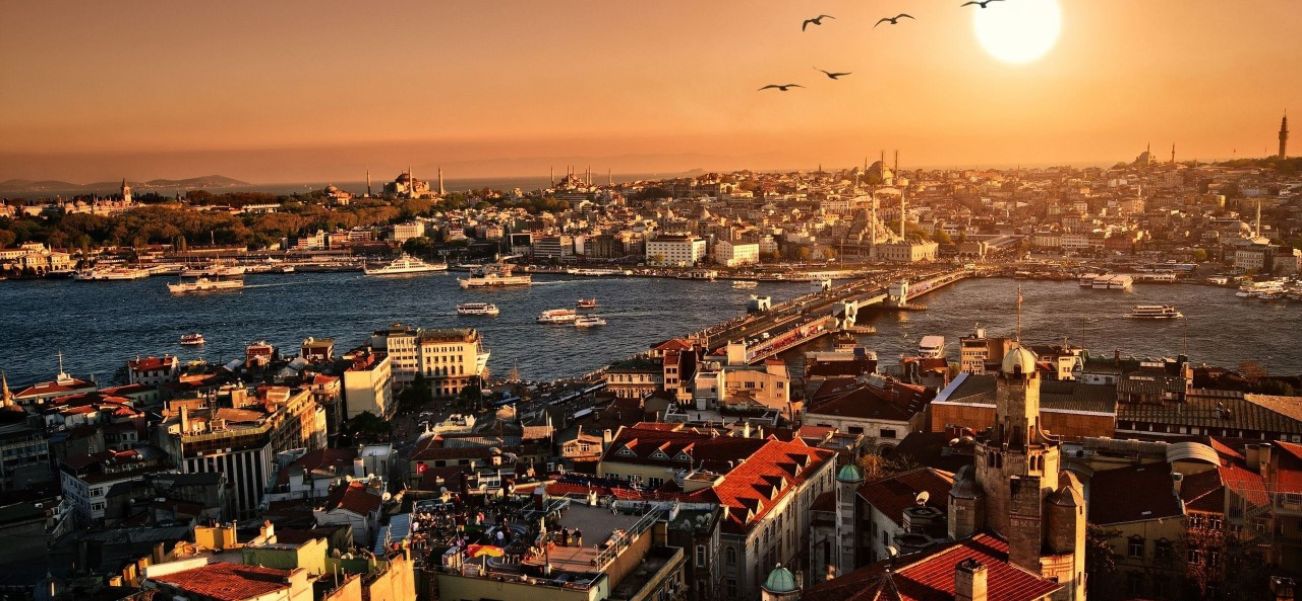

World Famous Turkish Pianist Fazıl Say: Biography & Music
When you think of modern classical music, few names command as much respect—and controversy—as the world famous Turkish pianist Fazıl Say. A virtuoso who blends the harmonic richness of Western classical tradition with the microtonal soul of Turkish folk and Ottoman classical music, Say has carved a unique niche in the 21st-century piano repertoire. But his journey from a gifted child in Ankara to a globally celebrated artist has been anything but conventional.
In this guide, we’ll explore the biography, musical style, landmark compositions, legal battles, and enduring legacy of the world famous Turkish pianist Fazıl Say.
FAZIL SAY: WORLD FAMOUS TURKISH PIANIST & MUSICIAN
Listen to this podcast about "World Famous Turkish Pianist Fazıl Say":
Early Life and Musical Prodigy

Born on January 14, 1970, in Ankara, Turkey, Fazıl Say was destined for music. His father, Ahmet Say, was a renowned musicologist and writer, while his mother, Gürgün Say, was a pharmacist. Tragedy struck early: his mother passed away when Say was just a year old. Despite this loss, he found solace in rhythm and melody. He began piano lessons at the age of four and quickly displayed absolute pitch and an extraordinary capacity for improvisation.
By age 14, the Fazıl Say was already a nationally recognized prodigy. He penned his first composition, a piano sonata dedicated to his father, at 15. His formal training took him to the Ankara State Conservatory, where he studied piano and composition. But it was his decision to move to Düsseldorf, Germany, in 1991 that launched his international career. There, he studied at the Robert Schumann Institute under David Levine, honing the technical prowess that would later dazzle audiences at Carnegie Hall and the Salzburg Festival.
The Rise to International Stardom

The early 1990s marked a turning point. In 1994, Fazıl Say won first prize at the Young Concert Artists International Auditions in New York. That same year, he received the prestigious "Beracasa Prize" for his interpretation of George Gershwin’s music. Critics were unanimous: a new star had arrived.
His 1998 debut album of Bach’s keyboard concertos sold over 100,000 copies in Turkey alone—an unheard-of feat for classical music. But what truly set this Turkish pianist apart was his fearlessness. He didn’t just play the masters; he conversed with them. His recordings of Mozart’s complete piano sonatas were praised for their rhythmic clarity and mischievous wit. Meanwhile, his renditions of Stravinsky’s "Petrushka" and Bartók’s piano works showcased a percussive, almost orchestral touch.
By the 2000s, Say was performing with elite ensembles: the New York Philharmonic, Berlin Philharmonic, Vienna Philharmonic, and Orchestre National de France. He became a regular at the Montreux Jazz Festival, surprising purists with his jazz improvisations. His 2005 album "Istanbul Symphony" (with the Borusan Istanbul Philharmonic Orchestra) became a global bestseller, cementing his status as a crossover icon.
"Four Seasons" by Fazil Say & Serenad Bağcan
A Unique Musical Language: East Meets West

What makes the world famous Turkish pianist Fazıl Say truly indispensable is his compositional voice. While many concert pianists interpret existing works, Say creates a new world. His music is a fusion: the formal structures of Bach, the rhythmic drive of Stravinsky, the bluesy soul of Gershwin, and the modal mysticism of Turkish "âşık" (folk poet) traditions.
Listen to his "Black Earth" (Kara Toprak), inspired by folk singer Âşık Veysel. The piece uses the piano as a "saz" (Turkish lute): the right hand plucks the strings directly inside the instrument while the left hand plays a haunting melody. It’s a revolutionary technique that has become his signature. Similarly, his "Piano Sonata “Gezi Park 3” incorporates protest chants and rhythmic patterns from the 2013 Turkish protests, turning political resistance into concert-hall art.
His other major works include:
- Istanbul Symphony A five-movement symphony that paints a sonic portrait of Istanbul, using Turkish percussion and neoclassical motifs.
- Hezarfen A piano concerto inspired by Hezarfen Ahmed Çelebi, the legendary Ottoman aviator.
- Nazım An oratorio based on the poems of Nazım Hikmet, Turkey’s most famous dissident poet.
- Mozart in Istanbul A playful, imaginary dialogue between Mozart’s "Rondo alla Turca" and Ottoman court music.
The Controversies: Free Speech on Trial

No profile of this world famous Turkish pianist is complete without addressing his legal battles. Say is an outspoken humanist and secularist. In 2012, he retweeted a poem comparing a biblical stoning to Turkey’s religious conservatism. He also joked about the Islamic call to prayer. For these tweets, he was charged with “insulting religious values” under Article 216 of the Turkish Penal Code.
In 2013, a Turkish court sentenced him to 10 months of suspended prison time. The verdict sparked international outrage. Artists like Yo-Yo Ma, Salman Rushdie, and Peter Gabriel condemned the ruling. Fazıl Say became a symbol of artistic freedom. “Art is always about freedom,” Say told the BBC. “If you take freedom, you kill the art.”
Although the sentence was later overturned by Turkey’s Supreme Court of Appeals in 2015, the damage was done. Say’s concerts were canceled by some municipalities, yet international demand skyrocketed. He responded with his "Say on the Road" tour—100 concerts across five continents. The controversy, paradoxically, amplified his global platform.
In 2016, he was acquitted of a second charge (“insulting the president”), but the experience left an indelible mark. Today, Fazıl Say continues to advocate for secularism, human rights, and freedom of expression through his music and social media.
Signature Performances and Recordings

For those new to his catalog, here are five essential recordings that define Fazıl Say:
- Bach: Complete Piano Concertos (1998) A landmark interpretation, blending baroque precision with jazz-inflected rubato.
- Istanbul Symphony (2005) His magnum opus; a love letter to his hometown.
- Mozart: Complete Piano Sonatas (2010) Fresh, witty, and brilliantly articulated.
- Say Plays Say: Black Earth & Other Works (2013) Includes his most famous solo piano pieces.
- Beethoven: Piano Sonatas Nos. 8, 14, 23 (2017) A storming, emotional take on the “Pathétique,” “Moonlight,” and “Appassionata.”
He has also collaborated with non-classical artists, including singer Sertab Erener (former Eurovision winner) and jazz legend Chick Corea. His 2019 album "Troy Sonata" was commissioned for the ancient city’s 5,000th anniversary, blending Homeric themes with Anatolian rhythms.
"Black Earth" by Fazil Say
The Fazıl Say Style: Technique and Interpretation

How would one describe his playing? Words like “rhythmic elasticity” and “auditory storytelling” come to mind. Fazıl Say does not play notes; he narrates emotions. His left hand often acts as a percussion section—sharp, dry, and incisive—while his right hand sings with a vocal, almost ornamental quality. He is not afraid of silence. In slow movements, he uses dramatic pauses that feel like sighs.
Unlike many classical pianists, Say frequently composes his own encores. At a recital in London’s Wigmore Hall, he played an improvisation on a text message from an audience member. This spontaneity connects him directly to the Ottoman tradition of "taksim"—an improvised modal introduction before a formal composition.
Awards and Accolades

Fazıl Say has received numerous honors:
- ECHO Klassik (Germany) Multiple awards, including Instrumentalist of the Year (2010).
- International Beethoven Prize for Human Rights (2017) Awarded for his courageous stance against political repression.
- Honorary Doctorate from Boğaziçi University (Istanbul) and the University of Michigan.
- Order of Arts and Letters (France) Chevalier rank (2013).
- Grammy nomination for "4 Cities" (2012) Best Classical Crossover Album.
Why Fazıl Say Matters Today

In an era where classical music is often perceived as elitist or disconnected, the world famous Turkish pianist Fazıl Say is a vital bridge. He proves that a Turkish musician can master Bach while also reimagining Sufi poetry. He shows that a concert hall can be a site of political resistance. And he reminds us that the piano—that most Western of instruments—can speak with an Anatolian accent.
His recent projects include the "Dünya (World) Oratorio" (2021), written for the 100th anniversary of the Turkish War of Independence, and a children’s album titled "The Little Prince and His Friends" (2023), which introduces classical music to young ears through storytelling.
Say currently splits his time between Istanbul and Vienna. He continues to tour relentlessly—over 100 concerts a year—and composes daily. His social media presence (over 2 million followers on X) is unusually direct for a classical artist: he shares political commentary, behind-the-scenes rehearsal clips, and spontaneous piano improvisations.
How to Experience Fazıl Say’s Music

If you’re new to Fazıl Say, here’s a listening roadmap:
- Start with "Black Earth" (YouTube or Spotify). It’s only 7 minutes long but will redefine what you think a piano can do.
- Then listen to "Alla Turca Jazz" (his take on Mozart’s Rondo). It’s playful, virtuosic, and instantly memorable.
- For something profound, watch his live performance of "Nazım Oratorio" (available on DVD/streaming). It features Turkish poetry set to neoclassical orchestration.
- To understand the controversy, read his memoir "Fazıl Say: My Life, My Music, My Fights" (2020, only in Turkish and German currently).
Conclusion: The Unstoppable Force of Fazıl Say
The world famous Turkish pianist Fazıl Say is far more than a pianist. He is a composer of rare originality, a fearless human rights advocate, and a global ambassador for Turkish culture. His fingers fly across the keyboard with percussive fury one moment and tender lyricism the next. His compositions—rooted in Anatolian soil yet reaching for the stars—have expanded the piano repertoire for the 21st century.
Whether you admire him for his Bach, his bold politics, or his breathtaking "Black Earth", one thing is certain: Fazıl Say refuses to be ignored. He has turned legal persecution into artistic fuel, traditional folk songs into avant-garde masterpieces, and a concert piano into a political stage. For lovers of classical music, jazz, Turkish folk, or simply fearless artistry, Fazıl Say is an essential voice of our time.
Have you experienced Fazıl Say live or listened to his “Istanbul Symphony”? Share your thoughts below. And if you’re new to his work, start with “Black Earth” today—you’ll never hear the piano the same way again.
Turkish Language Materials