


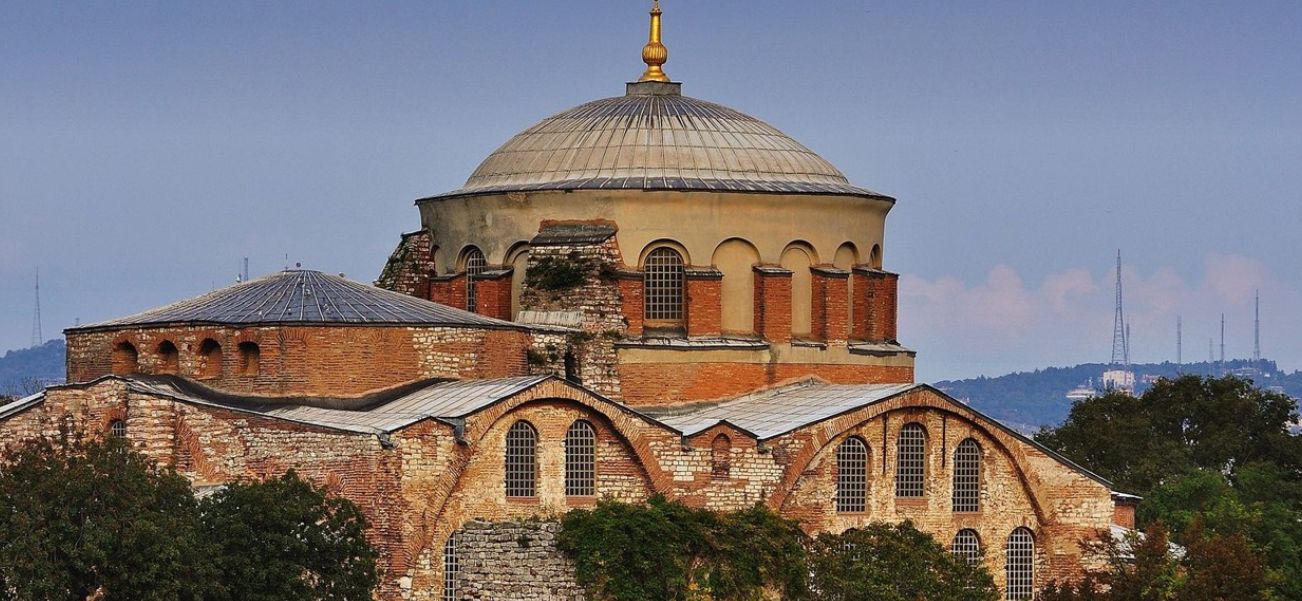
Hagia Irene in Istanbul: Discover the City’s Oldest Byzantine Church & Hidden Gem
Istanbul is a city where history lies layered upon itself, a place where you can quite literally stand in a spot that has witnessed the rise and fall of empires. For most first-time visitors, the magnetic pull of the Hagia Sophia and the Blue Mosque is irresistible—and rightfully so. However, tucked away in the serene outer courtyard of Topkapı Palace sits a structure that often goes unnoticed by the masses but is absolutely essential for anyone wanting to understand the city’s true depth.
This is the Hagia Irene (Aya İrini), a name that means "Holy Peace." It is not only the oldest known church structure in Istanbul but also one of only two Byzantine churches in the city that was never converted into a mosque. Its walls tell a story of emperors, earthquakes, iconoclastic controversies, and even Ottoman swordsmiths. Whether you are a history buff, an architecture enthusiast, or simply a traveler seeking a moment of tranquility away from the crowd, this guide will walk you through everything you need to know about this remarkable monument.
HAGIA IRENE: ISTANBUL'S OLDEST CHURCH
Listen to this podcast about "Hagia Irene":
Istanbul's Byzantine Gems: Exploring Constantinople's Legacy
The Historical Significance of Hagia Irene
To understand Istanbul, one must understand Constantinople. And to understand Constantinople, one must start with Hagia Irene. The story of this church is deeply intertwined with the very founding of the city.
The Constantinian Origins (4th Century)

The original structure of Hagia Irene was commissioned by Emperor Constantine the Great in the 4th century, making it the first church completed in the new capital of the Roman Empire. This places its origins even before the first Hagia Sophia. Before the current walls of Topkapı Palace existed, this church stood as the primary cathedral of the city and the seat of the Patriarchate. It was within these grounds that the Second Ecumenical Council was held in 381 AD, shaping the doctrines of Christianity that are still recognized today.
Sultanahmet Travel Guide: Top Things To See in Istanbul's Historic Heart
The Justinian Reconstruction (6th Century)

Like much of the city, Hagia Irene was not immune to the fires and destruction of the infamous Nika Revolt in 532 AD. In the wake of this devastating uprising, Emperor Justinian I—the same emperor who built the grand Hagia Sophia—ordered the rebuilding of Hagia Irene. Completed around 548 AD, this reconstruction transformed the church into the domed basilica we see today, showcasing the architectural ambition of the early Byzantine golden age.
The Iconoclastic Era (8th Century)

The most defining feature of Hagia Irene’s interior comes from its second major reconstruction. After a severe earthquake in 740 AD, Emperor Constantine V ordered extensive restorations. This period coincided with the Byzantine Iconoclasm, a time when the veneration of religious images (icons) was forbidden. Because of this, the interior was decorated not with figurative mosaics of saints or Christ, but with a stunning gold mosaic cross in the apse—a rare and perfectly preserved example of Iconoclastic art.
Hagia Sophia: The Timeless Symbol of Istanbul's Spiritual and Imperial Legacy
Architectural Overview: A Blend of Styles
Walking into the Hagia Irene Museum, you are struck by a sense of austere grandeur. Unlike the later, more ornate churches, Hagia Irene offers a raw connection to early Byzantine engineering.
Exterior and Setting

Situated in the first courtyard of Topkapı Palace, the church appears as a solid, brick-and-stone structure. Its location is significant; it was never converted into a mosque because it was used as a storage depot and arsenal (Cebehane) by the Ottomans for centuries. This secular use meant that its Christian identity was preserved, albeit hidden behind walls filled with weapons and military trophies.
Interior Layout

The building follows a basilica plan combined with a central dome—a transitional style that bridges early Christian and medieval Byzantine architecture. The interior measures an impressive 57x32 meters. As you enter from the narthex, you walk into a nave flanked by two aisles, divided by piers and columns. Look up, and you’ll see the main dome, which stands 35 meters high and 15 meters wide, pierced by twenty windows that flood the space with natural light.
Topkapi Palace: Istanbul's Iconic Museum
The Synthronon

One of the most unique architectural features preserved here is the synthronon—six tiers of marble benches arranged in a semicircle in the apse. This is where the clergy would sit during the Divine Liturgy, and it is the only surviving synthronon in Istanbul from the Byzantine era. Standing before it, you can almost visualize the Patriarch and his priests gathered in prayer.
The Art of Hagia Irene: The Cross and the Word
The interior decoration of Hagia Irene is sparse compared to the glittering mosaics of its neighbor, yet it is precisely this sparseness that makes it globally significant.
The Apse Mosaic

The dominant feature is the large mosaic cross in the apse. Outlined in black against a shimmering gold background, the cross features flared ends and teardrop shapes. This is not merely decorative; it is a powerful theological statement from the Iconoclastic period, emphasizing the symbol of Christ’s victory over any attempt to depict the divine in human form.
The Inscriptions

On the bema arch, you will find inscriptions from Psalm 64 and the Book of Amos. These texts praise the house of the Lord, serving as a spiritual guide for worshippers entering the sanctuary. Interestingly, there is evidence of alterations to these inscriptions, hinting at the changing theological winds of the Byzantine court over the centuries.
From Byzantine Church to Ottoman Arsenal to Museum
The survival of Hagia Irene is a story of repurposing rather than destruction.
The Ottoman Arsenal

After the conquest of Constantinople in 1453, Sultan Mehmed II enclosed the church within the walls of his new palace. The Janissaries, the elite Ottoman soldiers, used the building as an arsenal (Cebehane). For centuries, the space that once held hymns and prayers was filled with cannons, swords, and armor. This continued until 1826. This unique history explains why the building lacks minarets or Islamic calligraphy—it was never consecrated as a mosque, but rather used as a functional military depot.
The First Museum in Turkey

In the 19th century, Hagia Irene took on a new role. In 1846, it was converted into the Müze-i Hümayun (Imperial Museum), making it the first official museum in the Ottoman Empire and, by extension, in Turkey. It housed an collection of antiquities and military artifacts before the collection was moved to the purpose-built Istanbul Archaeology Museums.
Istanbul Archaeological Museums: A Portal to Ancient Civilizations
Modern Era: Concert Hall and Museum

Since 1980, Hagia Irene has been the stunning venue for classical music concerts during the Istanbul International Music Festival, thanks to its extraordinary acoustics. After extensive restorations, it was opened to the public as a museum in 2014.
Hagia Irene vs. Hagia Sophia: Key Differences

While their names are similar, these two monuments offer vastly different experiences. Understanding this contrast is key to appreciating Hagia Irene.
- Conversion Hagia Sophia was converted into a mosque and later a museum (and recently back to a mosque), resulting in the addition of minarets, mimbar, and covering of mosaics. Hagia Irene was never a mosque; it was an arsenal, preserving its original Byzantine structure.
- Decoration Hagia Sophia boasts 6th-century figurative mosaics and Islamic calligraphy. Hagia Irene features an Iconoclastic cross mosaic.
- Crowds Hagia Sophia is one of the most visited monuments in the world. Hagia Irene is a haven of peace, often described as a "hidden gem".
- Patriarchal History Hagia Irene served as the cathedral church before Hagia Sophia was completed.
Visitor Information: Hours, Tickets, and Tips

Planning a visit to Hagia Irene is easy, but there are a few key details to know to make the most of your trip.
Location and How to Get There
Hagia Irene is located in the Sultanahmet district, within the First Courtyard of Topkapi Palace. The address is Cankurtaran, 34122 Fatih/Istanbul.
Take the T1 line to Sultanahmet station. From there, it is a short 5-10 minute walk through the Sultanahmet Square towards Topkapı Palace.
Opening Hours
- Open Tuesday through Sunday
- Closed Mondays
- Hours 9:00 AM to 5:00 PM (Last entry at 4:30 PM). Note: Hours may extend during summer, so it is always good to check local listings.
Entrance Fee
- Standard Ticket As of recent updates, the entrance fee is approximately 350-500 Turkish Lira. Because rates can fluctuate with the economy, it is wise to check the current fee online or at the gate.
- Museum Pass Entry is included with the Museum Pass Istanbul, making it a great value if you plan to visit multiple sites.
How Long to Spend
Most visitors spend between 30 to 45 minutes exploring the interior. If you are interested in photography or sketching the architecture, you may want to allow an hour.
Why You Should Visit Hagia Irene
In a city filled with monumental crowds and bustling bazaars, Hagia Irene offers something rare: silence and perspective. It is a place where you can hear your own footsteps echo on ancient stones, where you can stand directly under a dome that has sheltered worshippers and warriors for nearly 1,500 years.
For those interested in the Byzantine Empire, it provides a crucial link to the city’s pre-Ottoman past. For photographers, the minimalist interior offers dramatic light and shadow play. And for weary travelers, it is simply a cool, quiet place to sit and absorb the sheer weight of history without the jostle of the crowds.
Nearby Attractions to Explore
Because of its prime location in Sultanahmet, Hagia Irene pairs perfectly with several other world-class sites.
- Topkapi Palace Since it is in the same courtyard, visiting Hagia Irene is a natural precursor to exploring the opulent palace of the Ottoman sultans.
- Hagia Sophia Just a five-minute walk away, you can compare the two great churches of Constantinople side-by-side.
- Istanbul Archaeological Museums Located just behind Topkapi Palace, these museums house the very artifacts that were once stored in Hagia Irene.
- Gülhane Park Right next to the palace, this beautiful park is perfect for a relaxing stroll after your museum visit.
Conclusion
The Hagia Irene Museum may not have the minarets of the Blue Mosque or the massive pendentives of Hagia Sophia, but it holds a quiet authority that demands respect. It is the beginning of the Byzantine story in Istanbul, a rare architectural survivor, and a peaceful sanctuary in one of the world's most dynamic cities.
Whether you are drawn by the mystery of the Iconoclastic cross, the history of the Ecumenical councils, or simply the chance to step off the beaten path, Hagia Irene is waiting to share its secrets with you. Don't miss the chance to walk through the gates of Topkapı Palace and discover this hidden gem for yourself.
Turkish Language Materials