

Anatolian Civilizations Museum Ankara: The Ultimate Guide to Turkey’s Archaeological Treasure
Tucked beneath the shadow of Ankara’s ancient castle walls lies a museum that has been called the finest archaeological museum in Turkey and one of the most important in the world. The Anatolian Civilizations Museum (Turkish: "Anadolu Medeniyetleri Müzesi") is not just a collection of dusty artifacts. It is a chronological journey through the entire sweep of human history in Asia Minor, from the Paleolithic era to the classical age.
Awarded the European Museum of the Year in 1997, this Ankara institution houses over 200,000 artifacts, though only a fraction are on display at any given time. What makes this museum unique is its thematic and chronological organization. Walk through its vaulted Ottoman halls, and you will trace the rise and fall of civilizations: the Neolithic settlers of Çatalhöyük, the Bronze Age Assyrian traders, the mighty Hittites, the enigmatic Phrygians, the warlike Urartians, and the Lydians who invented coinage.
For travelers, history students, and archaeology enthusiasts, visiting the Anatolian Civilizations Museum in Ankara is an essential experience. It provides context for nearly every major archaeological site in Turkey, from Göbekli Tepe in the east to Troy in the west. This comprehensive guide will walk you through the museum’s history, its most breathtaking galleries, practical visitor information, and why it deserves a full day of your Ankara itinerary.
Why the Anatolian Civilizations Museum Belongs on Your Bucket List

From Forbidden Brew to Cultural Icon: The History of Turkish Coffee in the Ottoman Empire
A Brief History of the Museum Itself
Before diving into the artifacts, it is worth understanding the building that houses them. The museum is located in two beautifully restored Ottoman-era buildings in the Atpazarı district of Ankara, just below Ankara Castle.
The first building is the Mahmut Paşa Bedesten, a covered bazaar built in 1464 by Mahmut Pasha, the grand vizier to Mehmet the Conqueror. Originally used for storing and trading valuable goods, the bedesten retains its original domed structure, creating a dramatic atmosphere for displaying monumental stone reliefs.
The second building is the Kurşunlu Han, a caravanserai built around the same time. It served as an inn for traveling merchants. After the founding of the Turkish Republic, Mustafa Kemal Atatürk personally supported the idea of creating a central museum to house Hittite artifacts that were previously scattered across the country. The museum opened to the public in 1921, and over the decades, it has expanded and modernized while preserving its historical character.
The decision to award the museum the European Museum of the Year was based not only on its collection but on its innovative display methods, which tell a coherent story of Anatolia rather than simply labeling objects by era.
Why Did the Eastern Roman Empire Become the Byzantine Empire? (And Why That Name Is Misleading)
The Paleolithic and Neolithic Galleries: The Dawn of Civilization
Your journey begins in the earliest periods of human habitation in Anatolia. The museum’s Paleolithic section displays simple flint tools and hand axes from sites like Karain Cave near Antalya, dating back as far as 500,000 years. These rough implements remind visitors that Anatolia was a crossroads for early hominids migrating out of Africa.
Çatalhöyük: A Neolithic Masterpiece
The real highlight of the early galleries is the material from Çatalhöyük, one of the world’s first and largest Neolithic settlements, located in the Konya Plain (7100–5700 BCE). The museum displays:
- Wall paintings Fragments of murals showing volcanic eruptions (possibly the earliest landscape painting in the world), hunting scenes, and geometric patterns.
- Mother Goddess figurines The most famous is a seated female figure flanked by two leopards, carved from baked clay. These figurines have sparked decades of debate about matriarchal religions in prehistory.
- Obsidian tools and mirrors Çatalhöyük was a center for obsidian trade, and the museum has beautifully worked blades and polished obsidian mirrors.
Walking through this gallery, you will understand how Anatolian communities transitioned from hunting and gathering to settled agriculture and complex social organization.
Zeugma Mosaic Museum: Discover the Finest Roman Art in Turkey
The Chalcolithic and Early Bronze Age: The Birth of Trade
As you move into the Chalcolithic (Copper Age) and Early Bronze Age galleries (roughly 5500–2000 BCE), you will notice a shift toward metalwork and long-distance trade. The museum displays stunning artifacts from sites like Alacahöyük, Hacılar, and Beycesultan.
The Alacahöyük Royal Tombs
The most spectacular objects from this period come from the royal tombs of Alacahöyük (circa 2400–2200 BCE). These burials contained an astonishing wealth of metal objects, including:
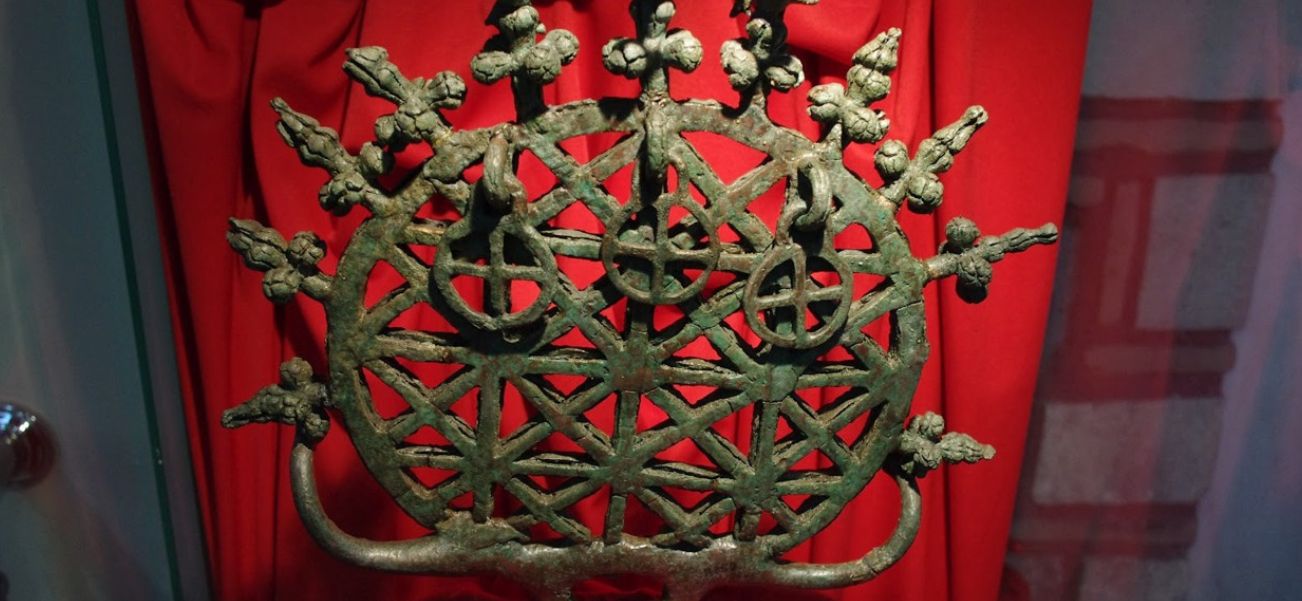
- Sun disks Intricate bronze and iron disks with geometric patterns, often interpreted as symbols of the sun or cosmic cycles. These have become iconic symbols of Anatolian Bronze Age art.
- Stag and bull figurines Small bronze statuettes of animals, often mounted on standards, representing the importance of hunting and ritual.
- Gold and electrum jewelry Diadems, pins, and necklaces of exquisite craftsmanship.
These artifacts reveal a society stratified into elites who controlled trade routes for metals like copper, tin, and silver. The museum does an excellent job of explaining how Anatolia became a crucial supplier of raw materials to Mesopotamia and the Aegean.
The Lycian League: The Dawn of Federal Democracy That Inspired the United States
The Assyrian Trade Colonies (Kültepe/Kanesh): The First Writing in Anatolia
One of the museum’s most academically important sections is dedicated to the Assyrian Trade Colony period (circa 2000–1750 BCE). This era marks the first appearance of writing in Anatolia. The site of Kültepe (ancient Kanesh) near Kayseri was a bustling merchant colony where Assyrian traders from northern Mesopotamia lived alongside local Anatolians.
The museum displays hundreds of cuneiform clay tablets enclosed in clay envelopes called "bullae". These tablets record:
- Commercial contracts for tin and textiles (traded for Anatolian silver and gold).
- Personal letters between merchants and their families back in Assur.
- Legal disputes and marriage contracts.
You will also see the bronze and tin ingots that were the stock-in-trade of these merchants, as well as the distinctive Anatolian-style pottery that shows cultural blending. This gallery provides a fascinating glimpse into the world’s first international trade networks.
The Hittite Gallery: The Crown Jewel of the Museum
No visit to the Anatolian Civilizations Museum is complete without spending serious time in the Hittite Gallery. The Hittites, who dominated Anatolia from roughly 1650 to 1200 BCE from their capital at Hattusa (near modern Boğazkale), left behind more monumental art than any previous Anatolian culture.
Monumental Stone Reliefs
The museum’s bedesten hall is dominated by massive orthostats (stone relief slabs) from Hittite cities like Alacahöyük and Sam’al (modern Zincirli). These reliefs depict:
- Processions of gods and kings The gods are shown wearing horned helmets and standing on animals or mountains. Look for the Weather God Tarhunna wielding a thunderbolt.
- Lion and sphinx gates Imposing guardian figures that once flanked city entrances.
- Hunting and battle scenes Chariots, archers, and fallen enemies.
The Inandık Vase
One of the most important Hittite artifacts in the museum is the Inandık Vase, a four-meter-long terra-cotta vase (reconstructed from fragments) dating to around 1600 BCE. It is decorated with a continuous frieze showing a ritual ceremony, possibly a sacred marriage or a festival. Scenes include musicians, acrobats, a couple in a religious union, and libation offerings. The vase is a priceless document of Hittite religious practice.
The Stag Vessel
Another icon of the collection is the Stag Vessel from Alacahöyük. This silver or bronze vessel in the shape of a stag was used for ritual libations. The stag was sacred to the Hittite tutelary god of the countryside. The vessel’s elegant, minimalist form is strikingly modern in appearance.
The Hittite Hieroglyphic Seals
The museum also holds a large collection of Hittite hieroglyphic seals—a script used for royal inscriptions and official documents. These seals connect the Hittites to their Luwian and Neo-Hittite successors, showing cultural continuity after the Bronze Age collapse.
The Phrygian Gallery: King Midas and Gordion
After the fall of the Hittite Empire around 1200 BCE, a new power rose in central Anatolia: the Phrygians, with their capital at Gordion (about 90 kilometers southwest of Ankara). The museum’s Phrygian gallery is filled with treasures from the famous tumulus tombs (burial mounds) around Gordion, including the probable tomb of King Midas (circa 740–700 BCE).
The Wooden Furniture from the Midas Mound
Because of Gordion’s dry climate, organic materials survived for nearly 3,000 years. The museum displays:
- Intricately carved wooden tables and serving stands These are the oldest surviving wooden furniture in the world. The inlaid geometric patterns (meander, checkerboard, and floral motifs) influenced later Greek art.
- Bronze vessels and fibulae The Phrygians were master metalsmiths, producing cauldrons adorned with human-headed bird figures (proto-Griffins) that were exported to Etruria and Greece.
- The Midas inscription A Phrygian inscription mentioning the name “Mita” (Midas) found on a votive object.
Phrygian Textiles and Jewelry
The gallery also showcases colorful glass and amber beads, gold earrings, and spiral fibulae (safety pins) that fastened Phrygian cloaks. These items paint a picture of a vibrant, horse-riding aristocracy with strong connections to both Urartu in the east and the Greek world in the west.
The Urartian and Lydian Galleries: Eastern and Western Kingdoms
Urartian Bronze Art
The Urartian kingdom (9th–6th centuries BCE) was centered around Lake Van in eastern Anatolia. The museum has a magnificent collection of Urartian bronze belts and quivers. These thin bronze strips are embossed with rows of mythical creatures: winged lions, sphinxes, goat-fish hybrids, and sacred trees. The craftsmanship is extraordinarily fine, showing the influence of Assyrian art combined with local styles.
You will also see large bronze cauldrons on tripod stands, used in religious ceremonies, and cuneiform inscriptions in the Urartian language (related to Hurrian).
Lydian Coinage and Gold
The Lydians of western Anatolia (capital: Sardis) are credited with inventing coinage in the 7th century BCE. The museum displays early electrum coins (a natural gold-silver alloy) stamped with the forepart of a lion—the symbol of the Lydian king Alyattes and later Croesus. The phrase “rich as Croesus” comes from this kingdom’s legendary wealth, derived from the gold-bearing Pactolus River.
Lydians & First Coin: How Money Was Invented in Turkey
The Classical, Hellenistic, Roman, and Byzantine Galleries
The later galleries, though less crowded, contain exceptional works:
- Roman marble portraits of emperors from the Ankara region, including a striking bust of Emperor Caracalla.
- Hellenistic gold jewelry from the tombs of minor Anatolian kings.
- Byzantine ecclesiastical objects Bronze censers, marble screens, and glassware from early Christian churches in Cappadocia and central Anatolia.
While these artifacts are superb, the museum’s real strength remains its pre-Classical collections.
Practical Information for Visitors
Location and How to Get There
The museum is located at Gözcü Sokak No:2, Ulus, Altındağ / Ankara, right next to the entrance to Ankara Castle. It is about 2 kilometers north of Kızılay (the modern city center).
- By metro Take the Ankaray (A1) line to Ulus station. From there, it is a 10-minute uphill walk.
- By bus Many buses from Kızılay and Sıhhiye stop near Ulus or Hisar Park.
- By taxi From Kızılay, the fare is approximately 30–40 TL (as of 2025).
Opening Hours
- Summer (April 1 – October 31) 8:30 AM – 7:00 PM (last entry at 6:30 PM)
- Winter (November 1 – March 31) 8:30 AM – 5:30 PM (last entry at 5:00 PM)
- Closed First day of religious holidays (Ramadan and Eid al-Adha).
Ticket Prices and Museum Card
- Standard admission Approximately 200 TL (check official website for updates; foreign tourists may pay a higher rate).
- Museum Card Turkey (Müzekart) Valid for Turkish citizens and residents. It costs about 60 TL and grants access to this museum plus hundreds of other state museums for one year.
Tips for Your Visit
- Plan for at least 2–3 hours. This is not a quick stop. The Hittite gallery alone requires an hour.
- Combine with Ankara Castle. After the museum, walk 5 minutes uphill to the castle for panoramic city views.
- Visit early morning (right at 8:30 AM) to avoid school groups and tour buses.
- Bring a notebook or camera (flash photography is usually prohibited in the Hittite hall due to the sensitivity of stone and pottery).
- Check for temporary exhibitions in the Kurşunlu Han wing—they often host world-class traveling shows.
Why This Museum Matters for Understanding Turkey
For many travelers, the Anatolian Civilizations Museum serves as a master key to the country’s archaeological sites. After seeing the Hittite reliefs here, a visit to Hattusa or Yazılıkaya becomes infinitely more meaningful. After studying the Çatalhöyük figurines, you will appreciate the Neolithic site with deeper eyes.
Moreover, the museum embodies the secular, humanistic vision of Mustafa Kemal Atatürk, who wanted modern Turkey to honor its pre-Islamic, pre-Turkish heritage. In a region often defined by religious and political divisions, this museum stands as a monument to shared human history.
Conclusion: A World-Class Museum for History Lovers
The Anatolian Civilizations Museum in Ankara is not a hidden gem—it is a world-famous institution that deserves a place on every serious traveler’s itinerary. Whether you are an archaeology student studying Hittite iconography, a casual tourist curious about King Midas, or a family looking for an educational day out, this museum delivers.
From the sun disks of Alacahöyük to the cuneiform tablets of Kültepe, from the stag vessel of the Hittites to the golden coins of Croesus, you will walk through 10,000 years of innovation, art, and power. And when you finally step back out into the bustling streets of Ulus, you will carry with you a new understanding of Anatolia—not as a remote corner of history, but as the very heart of the ancient world.
Have you visited the Anatolian Civilizations Museum? Which artifact impressed you most—the Inandık Vase, the Alacahöyük sun disks, or the wooden furniture from King Midas’s tomb? Share your thoughts in the comments below!
Turkish Language Materials