

Uncovering Patara: The Complete Guide to the Lycian League‘s Ancient Capital
Nestled on the stunning Mediterranean coast of modern-day Turkey, between the popular tourist hubs of Fethiye and Antalya, lies one of the most significant yet serene archaeological sites in the country: Patara. For history enthusiasts, it is a treasure trove of ruins spanning millennia. For beach lovers, it offers miles of golden sand. But for those who dig deeper, Patara represents the very heart of the Lycian League—an ancient federation that is considered one of the first democratic republics in history.
As the birthplace of St. Nicholas (the historical figure behind Santa Claus) and the capital of the Roman province of Lycia, the history of Patara is a fascinating mosaic of Lycian, Greek, Roman, and Byzantine cultures. Today, thanks to decades of meticulous excavation, visitors can walk through a city that was once a bustling maritime hub, where the sands of time have perfectly preserved monuments that shaped the ancient world.
PATARA: THE LYCIAN LEAGUE'S ANCIENT CAPITAL
UNESCO World Heritage Sites in Turkey
Early Beginnings and Mythology

The history of settlement at Patara extends back to the Bronze Age, long before the city became famous for its oracle. Archaeological finds on Tepecik Hill, the site’s original acropolis, reveal the presence of inhabitants as early as the 3rd millennium BC. The Hittites, who dominated Anatolia during the Late Bronze Age, referred to the city as "Patar". An inscription from the reign of King Tudhaliya IV (1236–1210 BC) mentions the king stopping at Patar to make offerings after a campaign in the Lukka lands (Lycia).
The city’s name appears in the native Lycian language as "Pttara". However, the ancient Greeks, who later heavily influenced the region, attributed the city’s founding to a mythical hero. According to tradition, Patarus, a son of the god Apollo, founded the city, establishing a lasting religious connection between Patara and the god of light, prophecy, and music.
The Oracle of Apollo

Before Patara became a political capital, it was a religious destination. The city was renowned throughout the ancient world for its temple and oracle of Apollo. While the famous oracle at Delphi operated year-round, the oracle at Patara had a unique schedule. According to the historian Herodotus, the prophetic priestess at Patara only delivered oracles during the six winter months of the year. During the summer, it was believed that Apollo traveled to Delos.
Pilgrims and city leaders would journey to Patara to consult the god, seeking advice on matters of war, colonization, and state policy. The epithet "Patareus" was frequently used for Apollo in classical literature, emphasizing the city’s religious importance. To this day, despite extensive excavations, the exact location of the Temple of Apollo remains one of the site’s greatest unsolved mysteries.
History of Antalya: From Ancient World to Modern Paradise
Patara in the Persian and Hellenistic Periods

Like much of Anatolia, Lycia fell under the control of the Achaemenid Persian Empire around 540 BC. Despite this domination, Patara retained its local identity and continued to flourish as a major port. Its strategic location at the mouth of the Xanthus River made it the gateway to the Xanthus Valley, allowing for the export of timber, grain, and other goods.
The city’s fortunes shifted dramatically with the arrival of Alexander the Great in 333 BC. As Alexander marched through Lycia, the city of Patara surrendered peacefully, avoiding the destruction inflicted on some other cities. Following Alexander’s death, his generals—the Diadochi—fought for control of his empire. Patara changed hands multiple times, falling under the rule of Antigonus, Demetrius Poliorcetes, and finally the Ptolemies of Egypt.
It was during Ptolemaic rule that the city briefly bore a different name. Ptolemy II Philadelphus renamed the city Arsinoe in honor of his sister-wife, Arsinoe II. However, the ancient name of Patara was too deeply rooted to be replaced permanently, and it soon reverted.
In 196 BC, the Seleucid king Antiochus III captured the city. Yet, the most significant political development came in 167 BC. Following the defeat of Antiochus, the Romans granted Lycia its freedom as a reward for its opposition to the Seleucids. This freedom allowed for the full flourishing of the Lycian League.
The Lycian League and the Parliament

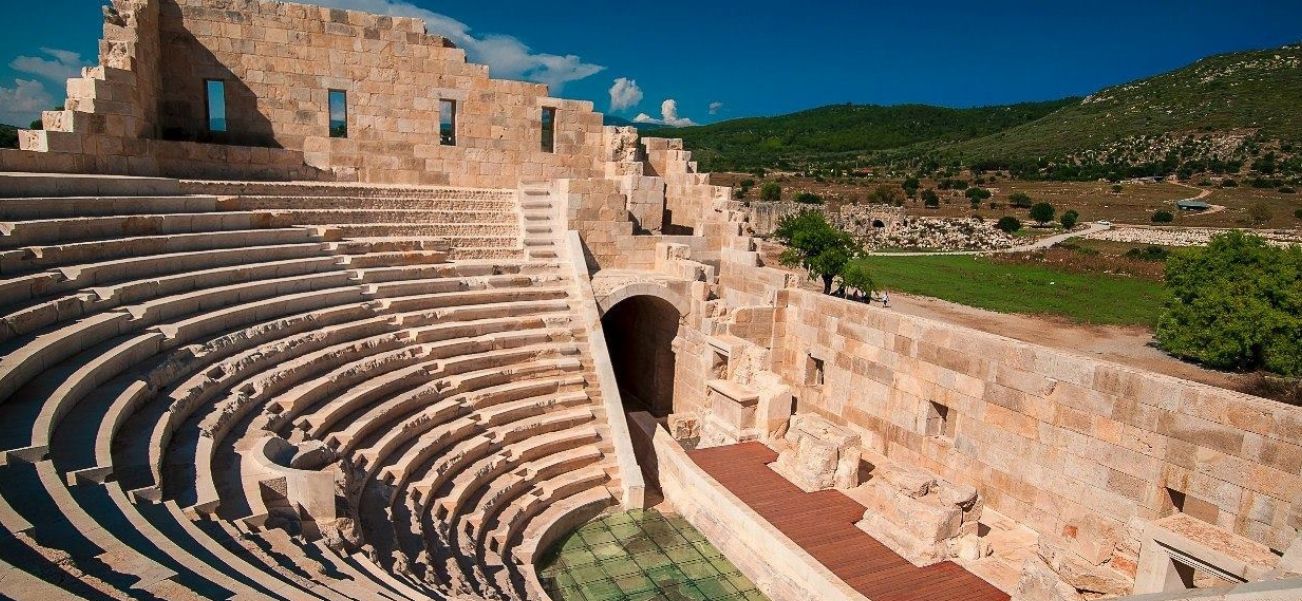
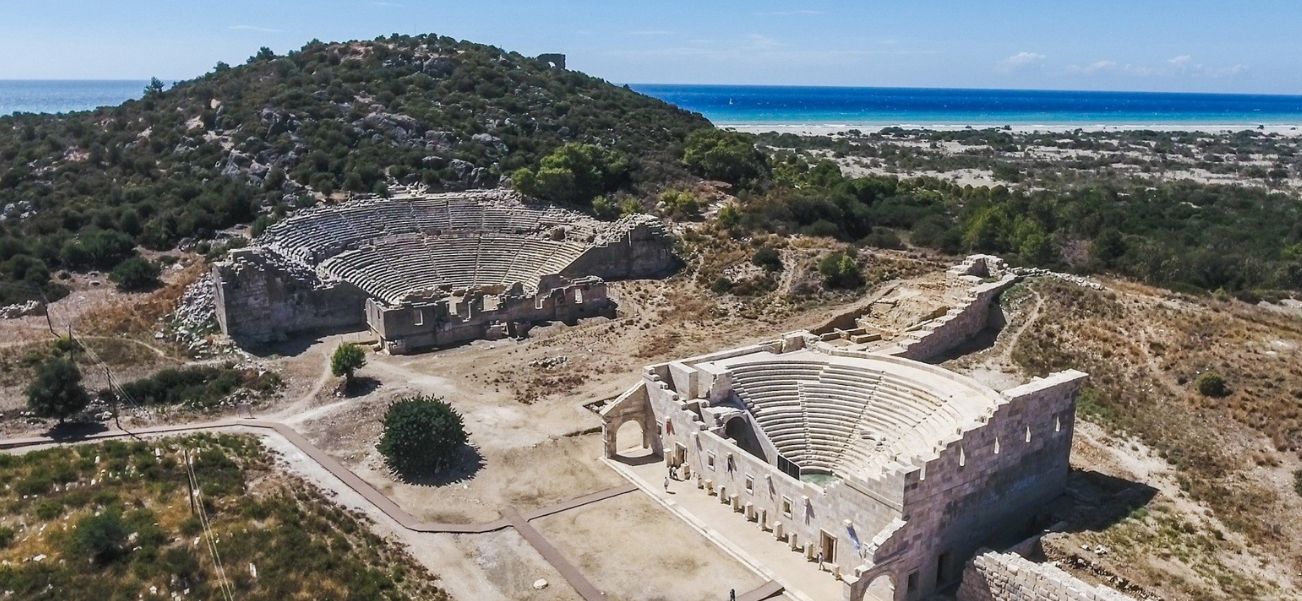
The heart of this democratic system was the Bouleuterion, or Parliament building. Constructed in the late 2nd or early 1st century BC, this grand structure served as the meeting place for the League’s senate for over 500 years. It could accommodate up to 1,400 people and featured a central "tribunalia" (raised platform) for magistrates.
The Bouleuterion in Patara is often cited as an inspiration for democratic systems. In fact, the building was restored in the 21st century with support from the Turkish Grand National Assembly, symbolically recognizing the deep historical roots of parliamentary democracy in Anatolia. When you visit Patara today, this restored structure stands as a proud monument to the world’s first democratic republic.
Roman Patara: Metropolis of Lycia
In 43 AD, the Roman Emperor Claudius formally annexed Lycia, establishing the province of Lycia et Pamphylia. Patara was designated as the provincial capital and the seat of the Roman governor. The city entered a golden age of construction and prosperity under the "Pax Romana".
The Nero Lighthouse

As the primary naval and trading port of the region, the safety of ships entering the harbor was paramount. In 64/65 AD, Emperor Nero ordered the construction of a lighthouse to guide sailors. This was no small structure; it stood on a 20-meter square podium and rose to a height of 26 meters. Buried under sand and silt for centuries, its foundations were rediscovered in 2004, and it stands today as one of the oldest surviving intact lighthouses from the Roman period.
Hadrian‘s Granary

Emperor Hadrian visited Patara in 131 AD, and during his reign, a massive granary ("horrea") was constructed along the harbor. Measuring approximately 70 meters long, this vaulted structure was divided into eight rooms used to store grain (likely from Egypt) before it was shipped to Rome to feed the populace. The building is remarkably well-preserved and testifies to Patara’s role in the imperial supply chain.
The Triumphal Arch and Urban Life

Entering the city in the 2nd century AD, visitors would pass through the magnificent triple-arched gateway dedicated to the governor Mettius Modestus. From there, they would walk down Marble Street, one of the widest and best-preserved colonnaded streets in Anatolia, lined with shops and leading to the agora.
The city’s prosperity was also reflected in its public baths, including the massive baths of Vespasian, and a grand theater built in the Hellenistic period but extensively renovated under Antoninus Pius around 147 AD, capable of seating thousands of spectators.
The Birthplace of Santa Claus

As the Roman Empire transitioned to the Byzantine era, Patara remained an important Christian center. The city was the birthplace of one of the most beloved saints in history: Nicholas of Myra, born around 270 AD.
Before he became the Bishop of Myra and the model for Santa Claus, Nicholas grew up in wealthy Christian family in Patara. He was known for his piety and generosity from a young age. It is believed that after the death of his parents, he used his inheritance to help the poor and needy in and around Patara. The city is also mentioned in the New Testament; the Apostle Paul stopped here during his final journey to Jerusalem, changing ships in its busy harbor.
Decline and Abandonment

The decline of Patara was a slow process driven by nature and conflict. The Xanthus River, which had made Patara prosperous by connecting it to the interior, gradually filled its harbor with silt. By the time of the Seljuk Turkish acquisition in 1211, the harbor was becoming a marsh. Ships could no longer reach the docks, and the economic lifeblood of the city was cut off. By the 14th century, the city was largely abandoned, with only the small village of Gelemiş remaining nearby.
Modern Excavations and Discoveries

For centuries, the ruins of Patara lay buried beneath massive sand dunes. Systematic excavations began in 1988 under the direction of Prof. Dr. Fahri Işık, and since 2009, have been led by Prof. Dr. Havva İşkan Işık. The sheer volume of sand has been a challenge—thousands of truckloads were removed just to uncover the theater and lighthouse.
Key discoveries have reshaped our understanding of the site:
- 1991 The Bouleuterion was identified and excavated.
- 1993 The Stadiasmus Patarensis (a Roman milestone listing all the roads of the province) was found, providing a wealth of geographical data.
- 2004 The Lighthouse of Nero was discovered, confirming the city’s maritime importance.
- 2020 Excavations revealed a 4th-century BC "women's room" ("gynaeconitis") with mirrors and ornaments, offering a unique glimpse into domestic life.
Visiting Patara Today

Today, Patara is a unique blend of history and nature. It is located within a special environmental protection zone, partly to safeguard the nesting grounds of the loggerhead sea turtles ("Caretta caretta") on Patara Beach, one of the longest beaches in Turkey.
When you visit, you can walk through the Triumphal Arch, sit in the seats of the Parliament building, wander down the colonnaded Marble Street, and stand at the base of the Nero Lighthouse, which is now 500 meters from the sea—a stark visual of how the landscape has changed.

Key Monuments to See:
- The Bouleuterion The restored parliament of the Lycian League.
- The Theater One of the most beautiful in Lycia, seating up to 15,000.
- Nero‘s Lighthouse The oldest lighthouse of its kind still standing.
- Hadrian’s Granary A massive testament to Roman trade.
- The Necropolis Hundreds of Lycian-style sarcophagi dotting the landscape.
From its origins as a Hittite port to its glory days as the capital of Roman Lycia, and finally as the birthplace of a saint who would become a global symbol of generosity, Patara is a site of immense historical significance. It is a place where you can witness the physical remains of the world's first democratic union and stand where St. Paul and St. Nicholas once stood. As excavations continue, Patara promises to reveal even more secrets, solidifying its place as a must-visit destination for anyone traveling the Turkish coast.
Turkish Language Materials