

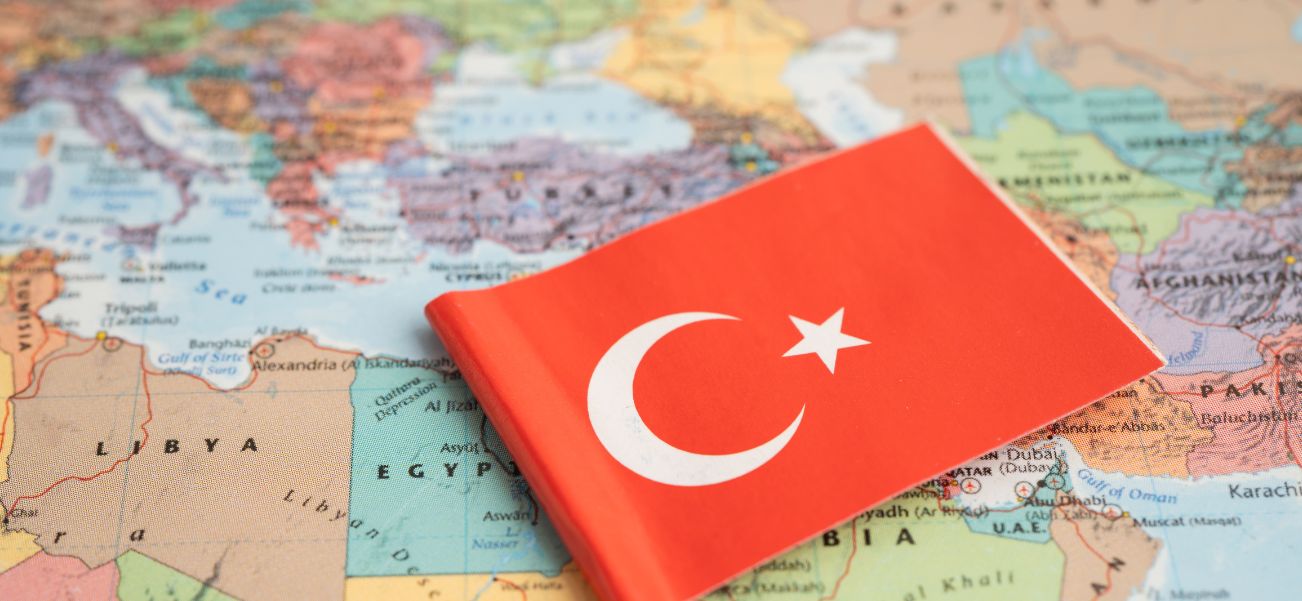
Is Turkey European, Middle Eastern, or Something Else Entirely?
For travelers, geographers, and political analysts alike, few countries defy easy categorization quite like Turkey. Ask ten different people whether Turkey is European or Middle Eastern, and you might get ten different answers. Walk the streets of Istanbul, and you will experience the paradox firsthand: the call to prayer echoes from minarets while ferries shuttle commuters between a continent in the morning and another by lunchtime.
The question, "Is Turkey in Europe or the Middle East?" is more than just a trivia point; it is a debate about history, culture, politics, and national identity. The short answer is that Turkey is a transcontinental country—a sprawling nation anchored in Anatolia (Asia) with a foothold in Thrace (Europe). However, the long answer is far more nuanced. Turkey is a unique geopolitical entity that blends Ottoman heritage, secular reforms, and modern strategic ambitions, making it something entirely its own: a true Eurasian nation.
EXPLORE TURKEY'S UNIQUE GEOPOLITICAL IDENTITY!
Listen to this podcast about "Is Turkey European, Middle Eastern or Something Else Entirely?":
Blue Anatolianism: An Alternative National Identity Vision for Turkey
The Geographical Bridge: A Tale of Two Continents
The most definitive aspect of Turkey’s identity is its physical geography. The country serves as a natural land bridge connecting the continents. The bulk of Turkish territory lies on the Anatolian Peninsula in Western Asia, making up roughly 97% of its landmass. The remaining 3% is located in the Balkans (Southeastern Europe), separated by the Turkish Straits.
The border between Europe and Asia runs through the heart of the country, marked by the natural waterways of the Bosphorus Strait, the Sea of Marmara, and the Dardanelles. This is most visible in Istanbul, the country's cultural and economic capital. The Bosphorus cuts the city in two; the historical peninsula and the southern shore feel vibrantly Middle Eastern, while neighborhoods in the European side (Thrace) feature modern streets, outdoor cafes, and a lifestyle that feels distinctly Western.
This location has defined Turkey’s strategic significance for millennia. As the successor to the Ottoman Empire, Turkey controls the only maritime route between the Black Sea and the Mediterranean, a fact that underpins its importance to NATO and regional powers.
Surprising Genetic Origins of Modern Turks
The Historical Crossroads: Ottoman Legacy and Kemalist Revolution
To understand Turkey’s cultural duality, one must look at its history. For over 600 years, the Ottoman Empire was a world power that straddled the East and West. At its height, it ruled over Anatolia, the Middle East, North Africa, and the Balkans, reaching the gates of Vienna. This history left an indelible mark: Turkish cuisine (kebabs, baklava), music, and social traditions share deep roots with the Levant and the Caucasus.
However, the fall of the Empire after World War I led to a radical transformation. Mustafa Kemal Atatürk, the founder of the Republic of Turkey, launched a series of Westernizing reforms—known as Kemalism—to reorient the new nation. He replaced the Arabic script with the Latin alphabet, adopted European legal codes and time zones, and enshrined secularism (laïcité) in the constitution. The goal was to break from the "Oriental" past and align with contemporary Western civilization.
This tension between the Ottoman heritage and Kemalist secularism is the crux of Turkey’s modern identity. As one scholar notes, "Kemalism" attempted to pull Turkish society away from its Middle Eastern traditions and toward a "New Türkiye" aligned with the West. Yet, the cultural memory of the Ottoman past remains vibrant, particularly in the conservative heartlands of Central and Eastern Anatolia, where life feels slower and more traditionally Middle Eastern.
Population of Turkey: A Deep Dive into Turkey's Dynamic Population
Cultural Identity: A Spectrum, Not a Monolith
Is Turkey culturally European or Middle Eastern? The answer changes depending on where you go and whom you ask.
- The Cities Coastal metropolises like Istanbul, Izmir, and Antalya feel very cosmopolitan. You see a vibrant youth culture, a thriving arts scene, and a lifestyle that mirrors Southern European cities.
- The Heartland Move into Central Anatolia (cities like Konya or Gaziantep), and the atmosphere shifts. The call to prayer is more dominant, social conservatism is stronger, and the bazaars echo with the sights and sounds of the Middle East.
- The People Most Turkish citizens identify first and foremost as Turkish. While some feel a strong connection to Europe and the West, others feel a kinship with the Muslim world and the Turkic states of Central Asia.
According to a 2009 essay from Seoul National University, Turkey’s identity can be viewed as "multiple." The author argues that Turkey is a country where "the Western system (democracy, constitutionalism, modernity) and Islam can coexist," a nation uniquely positioned to mediate between civilizations. This is why Turkey has been described by political scientists as a "torn country," caught between the Muslim world and the West.
Political Alignment: Between Brussels, Washington, and Eurasia
Politically, Turkey’s positioning is as complex as its culture.
The Western Anchor
Turkey has been a member of NATO since 1952 and possesses the second-largest standing military force in the alliance. It is officially a candidate for membership in the European Union (having applied in 1987 and started negotiations in 2005) and is a member of the Council of Europe and the OECD. Its economy is in a customs union with the EU, and it follows many European standards regarding manufacturing and safety.
However, relations with the EU have become increasingly strained. Recent academic research shows that members of the European Parliament struggle to view Turkey's Islamic identity and Ottoman history as part of a "European" fabric, increasingly viewing the nation as a strategic partner rather than a future member state.
The Eastern Turn
Under the leadership of President Erdoğan, Turkey has re-engaged deeply with the Middle East, the Caucasus, and Central Asia. It has mediated talks between regional rivals, strengthened ties with Turkic republics, and balanced its relations with Russia and Ukraine.
There is even a growing discourse within Turkish political circles about a "Eurasian" shift. In 2025, senior political figures proposed moving away from the "US-Israel coalition" and forming a strategic alliance with Russia and China, reflecting a desire for a multipolar foreign policy. As geopolitical expert Peter Zeihan notes, Turkey is "its own thing"—it is part of the Balkans, the Caucasus, and Mesopotamia, but it is not fully defined by any of them.
The "Something Else Entirely": The Rise of the Afro-Eurasian Identity
So, if Turkey isn't purely European or exclusively Middle Eastern, what is it? A growing consensus points to a new framework: Afro-Eurasia.
Modern Turkish strategists view their country not as a periphery of Europe or a subset of the Middle East, but as a central player in the massive landmass comprising Europe, Asia, and Africa. This concept, rooted in the theories of "ethnogenesis," suggests that Turkey's geography has created a unique national character that draws from all directions.
Turkey’s current foreign policy reflects this. It seeks to join BRICS as an alternative to the EU, deepens military cooperation with African nations, and acts as an energy hub for resources flowing from the Caspian and Middle East to Europe. Turkey is actively building a "civilizational bloc" based on shared Turkic roots and convergent interests with powers from China to Iran.
Conclusion: Embracing Duality
To ask if Turkey is European or Middle Eastern is to ask a question that the country itself transcends. It is a nation built on a paradox: a 99% Muslim population governed by a secular constitution; a NATO member with deep ties to Moscow and Tehran; a land where minarets stand beside modern skyscrapers.
Ultimately, Turkey is a bridge—not just a static structure that connects two points, but a dynamic space where East and West mix, merge, and create something new. For travelers, this means you can experience the ancient bazaars of the Middle East and the chic cafes of Europe in the same day. For the world, it means Turkey will continue to play a pivotal role as a mediator, a power broker, and a unique voice in a multipolar world.
Whether you visit for the history, the food, or the politics, one thing is certain: Turkey defies labels. And that is precisely what makes it one of the most fascinating places on earth.
Turkish Language Materials