


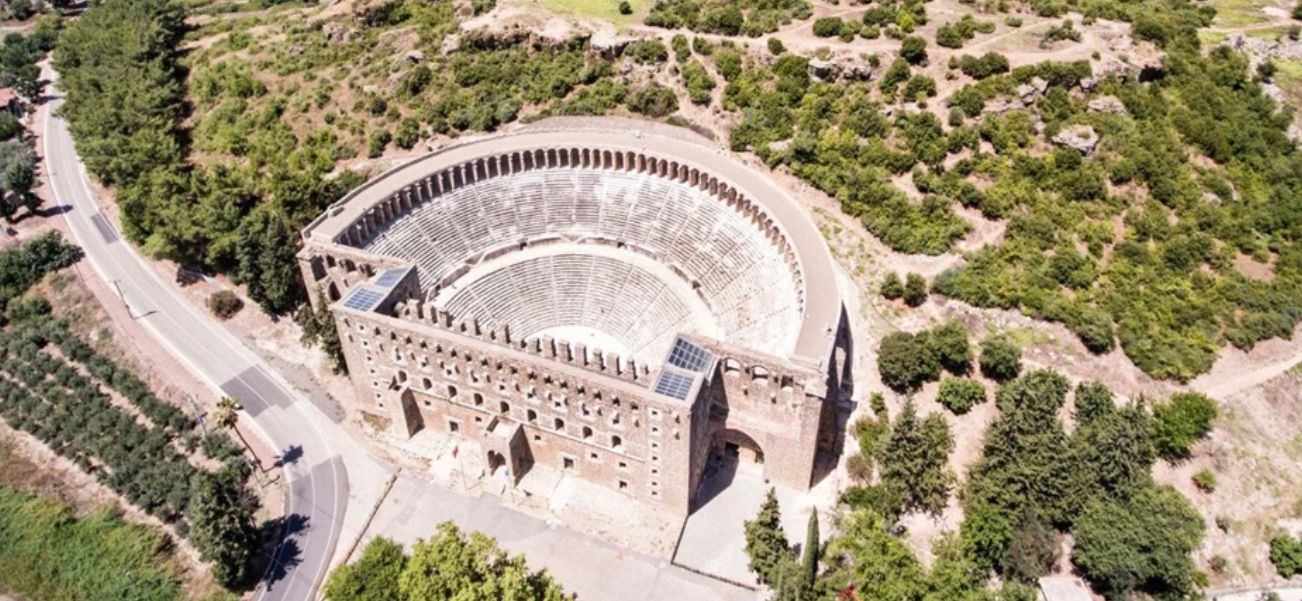
Aspendos Theater: A Journey Through Time in Turkey
Along the stunning Turkish Riviera, where the deep blue waters of the Mediterranean meet golden beaches, lies a historical treasure that transcends time. Just east of the bustling city of Antalya, the Aspendos Theater (also known as Aspendos Ancient Theatre) stands not as a mere collection of ruins, but as a complete, living monument to the Roman Empire’s architectural genius. Unlike many ancient sites where visitors must imagine the former glory, Aspendos greets you with its original magnificent stage wall still intact, towering into the sky just as it did nearly two millennia ago.
Often cited as the best-preserved ancient theater in the world, Aspendos is more than just a photo opportunity; it is a bridge between the 2nd century and today. Its enduring structure and legendary acoustics continue to host thousands of modern spectators for opera and ballet performances, proving that great design is truly timeless. In this post, we will explore the historical context of this marvel, break down its architectural brilliance, discuss its legacy of preservation, and provide you with everything you need to plan an unforgettable visit to this cornerstone of Antalya attractions.
ASPENDOS THEATER: THE BEST-PRESERVED ROMAN THATER IN THE WORLD
Listen to this podcast about "Aspendos Roman Theater in Antalya":
The Historical Context

The story of Aspendos begins long before the theater’s construction. The ancient city of Aspendos was originally settled by the Hittites and later colonized by Greeks from Argos around 1000 BC. Located on the Eurymedon River (modern-day Köprüçay), it became one of the most important trading cities in the region of Pamphylia due to its strategic position and lucrative salt and horse trade.
However, it was during the 2nd century AD, under the rule of the Roman Empire, that the city received its most famous addition. The Aspendos Roman Theater was built during the reign of the Roman Emperor Marcus Aurelius (161-180 AD). According to inscriptions found on the structure itself, the architect was a Greek named Zenon, son of Theodorus, who was a native of the city. The project was funded by two wealthy brothers, the Curtii, who dedicated the theater to the gods of the empire and the imperial household.
Discover Turkey's Most Instagrammable Places For Photography
A charming, albeit likely mythical, legend surrounds its creation. The story claims that the ruler of Aspendos announced a competition for the hand of his beautiful daughter. The prize would go to the man who built the most useful structure for the city. One architect built an impressive water supply system, while Zenon built this magnificent theater. When the ruler came to judge, he declared that the aqueduct was the more useful structure. However, Zenon allegedly led the ruler into the center of the theater and whispered, "Your daughter must be mine." His voice carried perfectly to the top rows where the ruler stood. Moved by the genius of the acoustics, the ruler awarded Zenon his daughter's hand. While the actual history is less romantic—citing wealthy patrons rather than a royal wedding—the legend perfectly encapsulates the defining feature of the theater: its impeccable sound.
Architectural Brilliance of Aspendos Theater

Walking through the entrance of the Aspendos Theatre is an awe-inspiring experience. The structure is a masterpiece of Roman engineering, designed to impress and function with flawless precision. The theater was built partly on the slope of a hill for natural support, with the rest of the towering structure supported by a complex system of vaulted arcades.
Dimensions and Capacity:
The theater has a massive diameter of 96 meters (315 feet). The "cavea" (seating area) is divided into two sections by a horizontal walkway called the "diazoma". With 41 rows of seats, historical records suggest it could hold between 12,000 and 15,000 spectators, making it one of the largest theaters of its time. Today, the lower marble seats are open to the public, allowing visitors to sit where ancient Romans once sat.
The Stage Building (*Scenae Frons*):
The most remarkable surviving feature is the stage wall. In most ancient theaters, this wall has crumbled away, but at Aspendos, it stands nearly intact. This two-story wall is a stunning example of Roman decorative architecture. It features five doors onto the stage and is adorned with rows of columns—Ionic columns on the lower floor and Corinthian columns on the upper floor. Niches within the columns once held statues of gods and emperors, and the central triangular pediment features a relief of Dionysos, the god of theater and wine. Originally, this wall was topped with a wooden roof that protected the stage, though that roof has long since disappeared.
Festivals in Antalya: A Celebration of Culture, Art, and Tradition
The Legendary Acoustics:
The architectural brilliance of Zenon is most evident in the theater's acoustics. The shape of the "cavea" and the precise angle of the seating create a natural amplification system. The famous legend claims that a coin dropped on the stage can be heard at the very top row. While this might be a slight exaggeration, the reality is still impressive: a normal speaking voice from the stage travels effortlessly to the highest seats without the aid of modern amplification. This acoustic perfection is the primary reason the theater remains a venue for live performances today.
A Legacy of Preservation

How has the Aspendos Ancient Theatre survived so completely when other structures have fallen to earthquakes, war, and time? The answer lies in the continuous use and respect the structure received from subsequent civilizations.
After the decline of the Roman Empire, the theater remained in use during the Byzantine era. More importantly, when the Seljuk Turks conquered the region in the 13th century, they recognized the value of this sturdy building. Rather than destroying it, the Seljuks converted the theater into a royal residence and caravanserai (a roadside inn). They used the stage building as living quarters and sealed the arches, which inadvertently protected the structure from further decay. This adaptive reuse ensured that the theater was maintained rather than quarried for stone, as happened to so many other ancient sites.
In the early 20th century, after the establishment of the Turkish Republic, Mustafa Kemal Atatürk ordered the restoration of the theater. The subsequent cleaning and consolidation work revealed the monument we see today, clearing away some of the medieval modifications to reveal the Roman masterpiece underneath. Today, conservation efforts continue. The theater is on the UNESCO Tentative Heritage List, and strict protocols are followed to balance public access with preservation, especially during the annual festival when modern stage equipment must be installed without damaging the ancient stonework.
UNESCO World Heritage Sites in Turkey
Modern-Day Significance

Aspendos is not a dead monument; it is the vibrant cultural heart of the region. Because of its structural integrity and perfect sound, it serves as the primary venue for the annual International Aspendos Opera and Ballet Festival.
Held every summer (typically in September), the festival transforms this 2,000-year-old stage into a world-class performance space. World-renowned orchestras, ballet companies, and opera singers perform under the stars, with the ancient stone walls providing a backdrop that no modern theater can replicate. Recent festivals have drawn record-breaking crowds, with nearly 16,000 attendees enjoying performances like "Swan Lake" and "La Traviata" within the ancient arena. Even the legendary tenor Luciano Pavarotti performed here, famously refusing to use any electronic amplification to respect the theater's natural acoustics.
This ongoing use creates a unique cultural experience. It allows modern audiences to connect with history in a visceral way, sitting on the same stones as Roman citizens, watching a performance in the very space designed for spectacle nearly two millennia ago. It solidifies the theater's status not just as a tourist stop, but as a living legacy of Aspendos history.
Best Coastal Towns and Cities in Turkey
Visiting Aspendos Theater

If this guide has inspired you to witness this marvel in person, here is everything you need to know for your visit.
Location and Transportation:
The Aspendos location is in the Belkıs village of the Serik district, approximately 40 to 50 kilometers east of Antalya city center. It is easily accessible by car via the D400 highway, following signs toward Serik. Alternatively, you can join one of the many guided tours departing from Antalya, or take a bus towards Serik and then a taxi to the site.
Practical Information:
- Address Belkıs, Aspendos Yolu, 07500 Serik/Antalya, Türkiye.
- Opening Hours Generally open daily from 8:00 AM to around 5:30 PM in the winter, with extended evening hours during the summer tourist season.
- Admission There is an entrance fee (around 340 Turkish Lira historically, but check current rates as they fluctuate). The Museum Pass is accepted here, which can save money if you plan to visit multiple sites in the region.
Tips for Your Visit:
- Arrive Early or Late To avoid the crowds and the midday heat, arrive right when it opens or late in the afternoon. The light in the late afternoon is also spectacular for photography.
- Wear Proper Footwear The stone steps are ancient and uneven. You will be doing a lot of walking and climbing. Do not wear flip-flops; sturdy, comfortable shoes are a must.
- Bring Water and a Hat There is limited shade inside the theater itself. During the summer, Antalya is scorching, so hydration is key.
- Explore the Acropolis Behind the theater, a path leads up the hill to the rest of the Aspendos ruins, including the Roman aqueduct and the ancient acropolis. The aqueduct is one of the largest and best-preserved in Anatolia and is a short drive from the theater. The walk up the hill is steep and rugged, but the view of the theater from above is well worth the effort.
- Clap or Sing Don't be shy! Test the acoustics yourself. Stand on the stage and speak, or have a friend sit at the top and clap. Experiencing the sound physics firsthand is the highlight of the trip.
Conclusion

The Aspendos Theater is far more than a collection of old stones; it is the enduring voice of the Roman Empire, echoing through the ages. Its survival allows us to understand the scale of Roman ambition, the precision of Greek-influenced design, and the universal human desire for art and entertainment. From the legendary whispers of a lovesick architect to the soaring arias of opera stars, the stage at Aspendos has borne witness to it all.
For anyone traveling to the Turkish coast, a visit to this ancient site is an absolute necessity. It stands as a proud testament to the rich tapestry of Turkey travel, offering a profound connection to the past that is both educational and deeply moving. Whether you are a history enthusiast, an architecture buff, or simply a traveler seeking beauty, the Aspendos Ancient Theater awaits to transport you back to the golden age of Rome. So, on your next trip to Antalya, take the short drive to Serik and listen—you might just hear the whispers of history calling your name.
Turkish Language Materials