
Why Turkish Didn’t Spread Globally Like English, Arabic or Spanish: Explained
In the grand tapestry of global languages, a few threads are woven more prominently than others. We live in a world shaped by the linguistic legacy of empires. English is the undisputed lingua franca of business, science, and the internet. Spanish echoes across continents from Madrid to Buenos Aires to Mexico City. Portuguese binds Brazil with its European origins. Arabic, through the Quran and the Caliphates, unites a vast swath of the Middle East and North Africa.
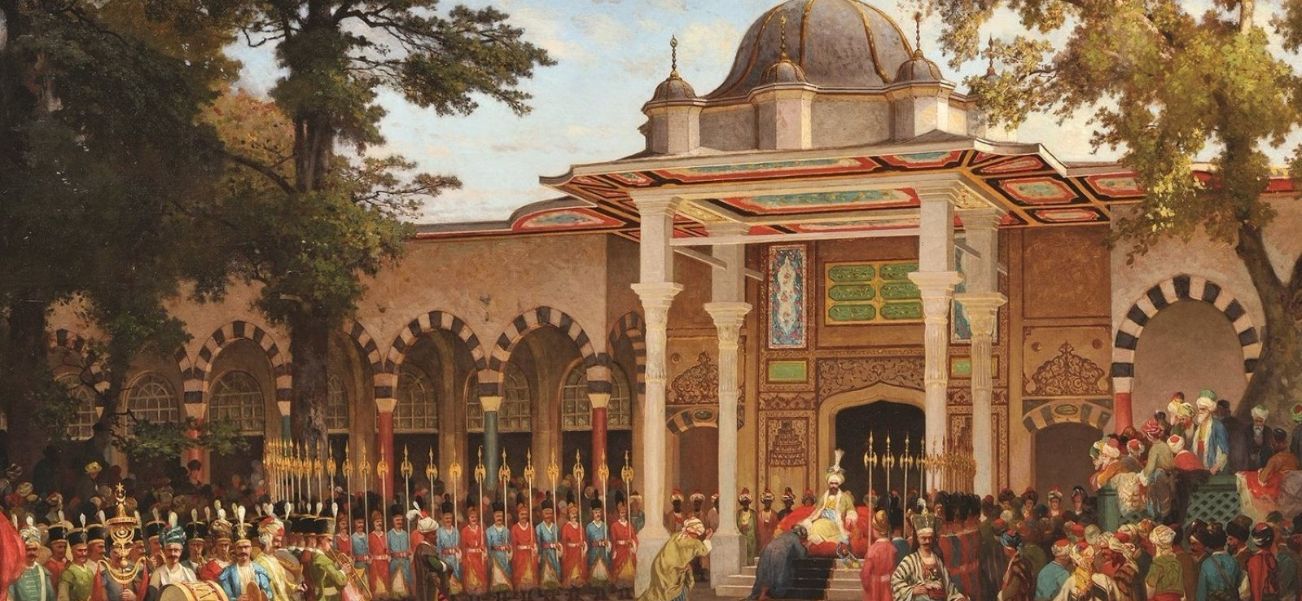
And then there is Turkish. Spoken by over 80 million people, primarily in Turkey and Northern Cyprus, it is a language of immense historical depth and cultural richness. It was the administrative tongue of the Ottoman Empire, a colossal, multi-ethnic state that spanned three continents and endured for over six centuries.
This fact often leads to a compelling historical puzzle: Why didn't the Turkish language achieve a global diaspora similar to its imperial counterparts? If the Ottomans were so powerful for so long, why is Turkish not widely spoken in the Balkans, the Arab world, or North Africa today?
The answer is not a simple one. It’s a complex story of imperial structure, religious dynamics, demographic realities, and a 20th-century revolution that intentionally looked inward. Let's unravel the historical, sociological, and political reasons behind the limited spread of the Turkish language.
WHY THE TURKISH LANGUAGE FAILED TO SPREAD WORLDWIDE LIKE ARABIC AND ENGLISH
Listen to the podcast about "Why Turkish language didn't spread globally like English or Arabic":
Ottoman Empire: Successor of the Roman Empire? The Ultimate Historical Debate
The Nature of the Ottoman Empire: A Mosaic, Not a Melting Pot
To understand the trajectory of the Turkish language, we must first understand the nature of the empire it served. The Ottoman Empire was not a nation-state but a vast, pragmatic multi-ethnic and multi-religious empire. Its primary organizing principle was not linguistic or ethnic homogeneity, but religion.
1. The Millet System: Devolution, Not Assimilation

The cornerstone of Ottoman governance was the millet (nation, community) system. This was a form of legal pluralism where non-Muslim religious communities (the primary "millets" were Greek Orthodox, Armenian Apostolic, and Jewish) were granted significant autonomy. They could govern their own personal status laws (marriage, inheritance), collect their own taxes, and run their own educational and religious institutions.
This system was brilliant for maintaining stability and control with minimal administrative overhead. However, it was disastrous for the spread of the Turkish language. There was simply no need for a Greek merchant in Thessaloniki or an Armenian artisan in Anatolia to learn Turkish for daily life, worship, or local commerce. Their entire civic and religious universe operated in their own language. The empire demanded taxes and military conscription, not linguistic conformity. This stands in stark contrast to the linguistic imperialism of European colonial powers.

2. Comparison with European Colonial Models:
- Spanish and Portuguese Empires These were settler colonial empires. Millions of Spaniards and Portuguese emigrated to the Americas, displacing, subjugating, or decimating indigenous populations. They imposed their language, religion, and culture as the supreme and only legitimate systems. The primary goal was extraction and settlement, which inherently required the replication of the motherland's culture, including its language.
- British Empire While also a settler empire in places like North America and Australia, the British in India and Africa employed a different model. They established a centralized administration and, crucially, an education system that produced a class of English-speaking local elites to help run the bureaucracy. English was the language of power, advancement, and "civilization."
The Ottomans, by contrast, did not send millions of Turkish settlers to the Balkans or the Arab world. The ruling class was present, but the demographic core remained in Anatolia. They governed through existing power structures, not by creating a new, Turkish-speaking elite from subjugated populations.
The Pic History Of Turkey Through The Ages
The Primacy of "Sacred" Languages: Arabic and Persian
Within the Ottoman elite itself, Turkish was often playing second fiddle to two other, more prestigious languages: Arabic and Persian.
1. Arabic: The Language of God and Law

As an Islamic empire, the Ottoman state held Arabic in the highest esteem. It was the language of the Quran, of Islamic theology ("ilm al-kalam"), and of jurisprudence ("fiqh"). No serious religious scholar could function without a deep knowledge of Arabic. While the average Turk prayed in Arabic, the religious institutions and legal schools (madrasas) across the empire operated primarily in Arabic. In provinces like Egypt, the Levant, and Iraq, the local Muslim populations already spoke Arabic. Imposing Turkish on them would have been not only impractical but also somewhat sacrilegious.
2. Persian: The Language of Courtly Culture

If Arabic was the language of the mosque, Persian was the language of the palace and high culture. From the Seljuk times onward, Persian influence on the Ottoman court was profound. It was the language of high literature, poetry, historiography, and refined etiquette. Ottoman Sultans and viziers were often fluent poets in Persian. A vast body of administrative and literary terminology was borrowed directly from Persian.
This created a diglossic situation within the ruling class. The language of the state, known as Ottoman Turkish ("Lisân-ı Osmânî"), was a complex amalgam of Turkish grammatical structures, a massive vocabulary of Arabic and Persian loanwords, and written in the Arabic script. This made it almost a different language from the "vulgar" Turkish ("kaba Türkçe") spoken by the common people in Anatolia. This linguistic barrier further limited its appeal and accessibility to non-Turkish subjects.
Demographics and the "Reversal of Fortune"

The demographic heartland of the Turkish people was, and always has been, Anatolia (modern-day Turkey). While there were significant Turkish settlements in the Balkans (e.g., in Bosnia, Bulgaria, and Greece), they were often enclaves rather than a overwhelming majority.
The end of the Ottoman Empire was a demographic catastrophe that sealed the linguistic fate of Turkish outside Anatolia. The Balkan Wars (1912-13) and the subsequent population exchanges, particularly the 1923 Compulsory Population Exchange between Greece and Turkey, saw the mass expulsion of over a million Orthodox Christians from Anatolia to Greece and around 400,000 Muslims from Greece to Turkey.
This event, along with earlier migrations and wars, effectively "un-mixed" the ethnic tapestry of the region. The potential for a lasting Turkish linguistic presence in the Balkans was drastically reduced as the Muslim/Turkish populations were consolidated within the new borders of the Turkish Republic.
The Atatürk Reforms: A Deliberate Turn Inward

Just as the empire collapsed, a new and decisive chapter began that would further define the Turkish language's trajectory: the founding of the Republic of Turkey under Mustafa Kemal Atatürk.
The new republic was built on the principle of Turkish nationalism, a radical break from the Ottoman's supra-national identity. A key part of this project was the purification and modernization of the Turkish language. This had two major consequences for its international spread.
1. The Language Revolution (1928)

In one of the most dramatic linguistic reforms in history, Atatürk replaced the Arabic script with a modified Latin alphabet. The goal was to increase literacy, modernize the language, and sever ties with the Ottoman past. Overnight, the entire written corpus of the nation became inaccessible without retraining.
While immensely successful domestically (literacy rates soared), it created a profound chasm with the past. The new generation could not read Ottoman texts, and more importantly for our question, it isolated Turkey from the rest of the Muslim world, which continued to use the Arabic script. A speaker of Arabic could previously decipher some Ottoman Turkish due to the shared script and vocabulary; this bridge was now burned.
2. The Purification Movement

Following the script change, the Turkish Language Association ("Türk Dil Kurumu") was established to lead a campaign to "purify" Turkish by replacing Arabic and Persian loanwords with words derived from Old Turkish or newly coined terms.
This further widened the gap. The Turkish of the Republic became increasingly distinct from the Ottoman Turkish that had been used across the empire. It was a language looking inward, forging a new national identity, not outward to maintain an imperial sphere of influence.
Lack of 20th-Century "Soft Power"
The final piece of the puzzle lies in the 20th century. The global spread of English was turbocharged by the economic and cultural dominance of the United States in the post-WWII era—American soft power. Hollywood, rock and roll, and later the IT revolution made English the language of global aspiration.
Similarly, Spanish and Portuguese benefit from the cultural output and economic ties of Latin America.
The Republic of Turkey, however, adopted a policy of neutrality and relative isolation for much of the mid-20th century. It did not become a major colonial power after the empire's collapse, nor did it project significant cultural or economic soft power on a global scale until very recently with the rise of Turkish television dramas ("dizi"). While these dramas have created a surge of interest in learning Turkish, particularly in the Arab world and Latin America, this is a 21st-century phenomenon that is only now beginning to have a minor impact compared to the centuries-long head start of English.
Conclusion: A Legacy of Different Imperial Paths
The story of why Turkish did not spread like English, Spanish, Portuguese, or Arabic is a masterclass in the different logics of empire and nation-building.
- The Ottoman Empire was a pre-modern, religiously-defined entity that governed through devolved power (millet system) and valued the sacred languages of Arabic and Persian over its own administrative tongue. It sought to rule diverse populations, not assimilate them.
- The European Colonial Empires were modern, profit-driven enterprises that used linguistic imperialism as a tool for control, settlement, and the creation of a pliable elite. They actively imposed their language.
- The Republic of Turkey, born from the empire's ashes, consciously chose a path of national consolidation, severing its linguistic ties to the Ottoman past through a radical language revolution and purification movement, thereby turning its focus inward.
Turkish, therefore, remains a powerful national language with a deep historical root, but its imperial past did not provide the right conditions for global dissemination. It was not built to spread, and when a new state finally had the will to project a unified linguistic identity, it did so by closing a chapter, not by opening a new one to the world. Its journey reminds us that political power alone does not guarantee linguistic legacy; the "nature" of that power and the choices that follow are what truly shape the destiny of a language.
Turkish Language Materials