

Turkish Mythology: Gods, Legends, Symbols, and the Enduring Legacy of the Turkic World
Explore Turkish mythology—from Tengri, Umay, and Erlik to the Ergenekon legend, the wolf, and the Book of Dede Korkut. Discover ancient Turkic gods, creation myths, symbols, and folklore.
WHAT IS TURKISH MYTHOLOGY?
Turkish mythology is the rich body of ancient stories, beliefs, and sacred traditions that shaped the Turkic world across Central Asia, Siberia, and beyond. It encompasses creation myths, powerful gods and goddesses, nature spirits, legendary heroes, sacred animals, and beliefs about the afterlife—all passed down through generations of oral storytelling before being recorded in writing.
Turkish mythology is closely related to the broader traditions of Turkic-speaking peoples, including those who lived across the steppes of Central Asia, Siberia, and neighboring regions. Because these communities were spread across vast territories and historical periods, their myths were never a single, fixed collection of stories. Instead, they varied by region and evolved through contact with other cultures and religions.
Central Asia is the historical setting for many early Turkic traditions. The sky, mountains, rivers, forests, horses, and seasonal changes played central roles in the spiritual life of nomadic communities whose survival depended on the natural world.
In this guide, we'll explore the most important Turkish gods and goddesses, creation myths, legendary heroes, sacred symbols, and the enduring legacy of Turkish mythology.
Podcast About Turkish Mythology
1. The Origins and Historical Background of Turkish Mythology
1.1. The Ancient Turkic Peoples
The early Turkic peoples inhabited the steppes of Central Asia, Siberia, and neighboring regions. Their way of life—shaped by migration, herding, and horseback riding—created a distinct worldview reflected in their myths.
1.2. Oral Traditions and Storytelling
Before many myths were written down, they were passed from generation to generation through songs, epic performances, and storytelling. This oral tradition preserved creation stories, heroic legends, and beliefs about the spirit world.
1.3. The Influence of Nature and Nomadic Life
The sky, mountains, rivers, forests, animals, horses, and seasonal changes were central to Turkic spiritual life. Communities closely connected to the natural world developed myths that explained natural phenomena and honored the forces of nature.
1.4. The Development of Turkic Beliefs
Ancient Turkic religious traditions were diverse and evolved through contact with other cultures and religions. The Orkhon inscriptions, for example, provide early evidence of Tengri and sacred land-and-water concepts, while many detailed creation narratives were recorded much later.
KEY POINT Turkish mythology should not be presented as a single, fixed collection of stories. Traditions varied across regions and historical periods.
2. Creation Myths and the Origin of the Universe
2.1. How Did the World Begin?
Turkic creation stories explain the emergence of the universe, the earth, humanity, and the forces that maintain cosmic order.
2.2. The Primordial Waters and Ak Ana
In the Altai creation tradition, Ak Ana (the White Mother) appears in connection with primordial waters and the beginning of creation.
2.3. Kayra Han and the Creation of the World
Kayra Han is a creator figure in particular Altai mythological accounts, responsible for bringing the world and its inhabitants into existence.
2.4. The Structure of the Universe
A widespread mythological motif describes three levels: the upper world, the human world, and the underworld. The sky, earth, and subterranean realm were linked through a cosmic axis or world tree.
2.5. Different Versions of Creation
Different Turkic traditions offer varying creation narratives. Rather than a single, uniform story, these myths share themes while differing in detail across communities.
3. The Gods and Divine Figures of Turkish Mythology
This section explores the most important Turkish gods and goddesses—one of the most searched topics in Turkish mythology.
3.1. Tengri: The Eternal Blue Sky

Tengri is associated with the sky and supreme divine authority. He is linked to rulership, destiny, and the prosperity of the Turkic people. The Orkhon inscriptions provide early historical evidence of Tengri's importance.
3.2. Umay: The Protector of Mothers and Children

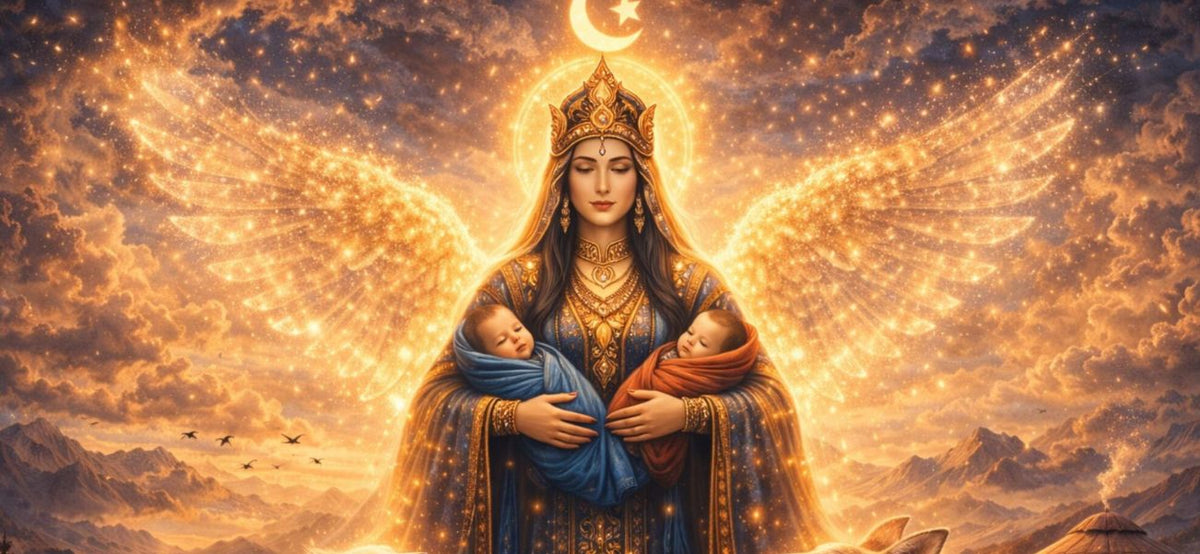
Umay is a female divine or protective figure associated with mothers, children, and fertility in various Turkic traditions. She appears in the Kül Tigin inscription, highlighting the importance of family protection.
3.3. Erlik: The Ruler of the Underworld

In Altai and Siberian creation traditions, Erlik is associated with the underworld, death, and destructive or opposing forces. He plays a role in certain creation narratives, though he should not be automatically equated with the Christian devil.
3.4. Ülgen: A Benevolent Creator Figure

Ülgen appears in particular Altai and Siberian traditions as a benevolent, sky-associated divine figure. His role is often compared with Erlik's in creation stories, though accounts differ.
3.5. Yer-Su: The Sacred Earth and Waters

Yer-Su represents the sacred character of land and water—including mountains, rivers, and the homeland. This concept reflects the close relationship between spiritual beliefs, the natural environment, and collective identity.
NOTE These figures do not necessarily belong to one universal pantheon. Their roles and relationships depend on the tradition and source being discussed.
4. Spirits and Supernatural Beings
4.1. Nature Spirits
Turkic traditions include beliefs concerning spirits associated with mountains, forests, rivers, lakes, and other natural places.
4.2. Protective Spirits and Ancestors
Traditions involving spiritual protection, family well-being, and ancestors reflect the relationship between humans and unseen forces.
4.3. Alkarısı and Related Folk Beliefs
Alkarısı is a figure in Turkish folk belief associated in some regional traditions with childbirth and the postpartum period. Later folklore should be distinguished from ancient mythological evidence.
4.4. Other Supernatural Beings
Selected regional figures—such as forest spirits or beings associated with particular landscapes—appear in reliable sources, each with its own cultural setting.
4.5. Good and Harmful Supernatural Forces
Supernatural beings could be understood as protective, dangerous, or ambivalent depending on the story and local tradition.
5. Sacred Animals and Important Symbols
5.1. The Wolf

The wolf is a powerful symbol associated with ancestry, guidance, survival, and origin legends. The Asena tradition is especially important in later representations of Turkic identity.
5.2. The Eagle and Other Birds

Birds appear as symbols or intermediaries between the human and celestial realms in selected traditions.
5.3. The World Tree

The world tree is a mythological motif connecting different levels of the universe. Its names and interpretations vary across Turkic cultures.
5.4. The Horse

The horse held practical and symbolic importance in steppe life, heroic narratives, travel, warfare, and the relationship between people and animals.
5.5. Fire, the Sun, the Moon, and Colors
Fire, the sun, the moon, and colors also served as symbols—though their meanings were not identical everywhere.
6. Famous Myths and Epic Legends
6.1. The Ergenekon Legend
The Ergenekon legend tells of a community taking refuge in an enclosed mountain valley and eventually finding a way out. Its themes include survival, renewal, liberation, and collective identity.
6.2. The Asena and Gray Wolf Traditions
Origin legends involving a wolf and the ancestors of a Turkic people are central to Turkic identity. Versions of the story differ, but the wolf remains a powerful ancestral symbol.
6.3. The Oğuz Kağan Epic
Oğuz Kağan is a legendary ruler and conqueror in Turkic epic tradition. His story explores ancestry, leadership, expansion, and the origins of tribal groupings.
6.4. The Book of Dede Korkut
Dede Korkut is a legendary sage and storyteller associated with the Oghuz Turks. The heroic tales explore courage, family, loyalty, wisdom, hospitality, and social responsibility. The tradition survives as an interconnected body of epic stories, oral performance, and music. UNESCO recognizes the heritage of Dede Qorqud / Korkyt Ata / Dede Korkut as intangible cultural heritage shared by Azerbaijan, Kazakhstan, and Turkey.
6.5. What These Legends Reveal About Turkic Culture
Recurring themes include communal survival, heroic conduct, respect for elders, kinship, loyalty, and the relationship between human beings and the natural world.
7. Shamanism, Rituals, and Beliefs About the Afterlife
7.1. The Role of Shamans
Ritual specialists—often called shamans in English-language discussions—played important roles in certain Siberian and Central Asian traditions. They were associated with healing, divination, and communication with spiritual realms.
7.2. The Connection Between Worlds
Journeys between cosmic realms are a recurring motif in some traditions, including the symbolism of the world tree and the drum.
7.3. Death and the Afterlife
Beliefs about the underworld, spirits, death, and the relationship between the living and the dead varied. Erlik traditions offer one example rather than a standardized Turkic afterlife.
7.4. Regional Differences
Rituals and beliefs differed considerably across Siberia, Mongolia's historical borderlands, and Central Asia—and changed over time.
8. The Influence of Islam and Cultural Change
8.1. The Spread of Islam Among Turkic Peoples
Islam spread among different Turkic communities over several centuries.
8.2. Older Motifs in Later Traditions
Elements of earlier oral traditions survived, were reinterpreted, or became incorporated into later legends, epics, customs, and folk beliefs.
8.3. The Blending of Cultural Traditions
The Book of Dede Korkut exemplifies an epic tradition reflecting both Islamic and older cultural elements.
8.4. Mythology and Religion Are Not the Same Thing
Modern Turkish society is religiously diverse. Studying ancient Turkic mythology does not imply that its beliefs are practiced universally today.
9. Turkish Mythology in the Modern World
9.1. Cultural Identity and National Symbols
Selected mythological figures—especially the wolf—appear in modern cultural representations and discussions of Turkic identity.
9.2. Literature, Film, Games, and Popular Culture
Mythological motifs appear in fantasy literature, historical fiction, comics, games, television, and contemporary art.
9.3. Preserving Oral Heritage
Collecting, translating, studying, and preserving traditional stories, songs, and epic performances remain essential to safeguarding this heritage.
9.4. Why Turkish Mythology Still Matters
Turkish mythology offers valuable insight into history, folklore, cultural exchange, and the imagination of Turkic-speaking peoples.
Conclusion: The Enduring Legacy of Turkish Mythology
Turkish mythology is a rich and diverse tradition with deep roots in Central Asia and Siberia. From Tengri, Umay, Erlik, and Ülgen to creation stories, supernatural beings, sacred animals, and epic heroes like Oğuz Kağan, these myths reveal how earlier communities understood the natural world, human destiny, and their place in the universe. The legacy of oral storytelling and cultural heritage continues to inspire and inform Turkic identity today.
FAQ About Turkish Mythology
1. What is Turkish mythology?
Turkish mythology refers to the ancient Turkic beliefs, legends, folklore, and epic traditions that shaped the spiritual and cultural worldview of Turkic-speaking peoples.
2. Who is the main god in Turkish mythology?
Tengri is often considered the supreme sky god, but the concept of a single main deity does not fully describe every Turkic tradition.
3. Who are the most important gods and goddesses in Turkish mythology?
Key figures include Tengri, Umay, Erlik, and Ülgen, each with distinct roles and regional contexts.
4. What is the Turkish creation myth?
Creation narratives vary, particularly those recorded in Altai traditions, involving figures like Ak Ana, Kayra Han, and the primordial waters.
5. What is the Ergenekon legend?
It tells of a community trapped in a mountain valley who eventually find their way out—symbolizing survival, renewal, and liberation.
6. Why is the wolf important in Turkic mythology?
The wolf appears in origin legends, especially the Asena tradition, and remains a powerful symbol of Turkic identity.
7. Is Turkish mythology the same as Greek or Norse mythology?
They share a broad function as bodies of traditional narratives, but differ in history, sources, and religious context.
8. Does Turkish mythology still exist today?
Yes—through folklore, oral traditions, epic heritage, and mythological imagery in modern culture.
Discover the gods, legends, and symbols of Turkish mythology—and explore the ancient stories that continue to shape Turkic cultural identity today.
Turkish Language Materials