

Lycian Rock Tombs: A Complete Guide to Turkey's Cliffside Tombs
Along the breathtaking Turquoise Coast of southwestern Turkey, something extraordinary clings to the cliff faces. Carved high into weathered limestone, the facades of ancient tombs gaze out over modern cities and serene river valleys. These are the Lycian Rock Tombs, the most iconic and mysterious legacy of the Lycian civilization. For anyone interested in ancient history, archaeology, or simply unforgettable travel experiences, these "cities of the dead" offer a unique window into a culture that flourished over two thousand years ago.
This guide will take you deep into the world of the Lycians, exploring the most famous tomb sites like the Amyntas Rock Tombs in Fethiye and the stunning necropolises of Dalyan and Myra. We will uncover the legends behind their sky-high placement, decode their architectural wonders, and provide you with all the practical information you need to visit these spectacular ancient wonders.
EXPLORING THE LYCIAN ROCK TOMBS: ANCIENT WONDERS OF THE TURKISH RIVIERA
Dalyan Travel Guide: Exploring Turkey’s Hidden Paradise
Who Were the Lycians?
Before climbing the cliffs to examine the tombs, it is essential to understand the people who built them. The Lycians were an ancient people inhabiting the region of Lycia in southwestern Anatolia from at least the 2nd millennium BCE until their eventual assimilation into the Roman Empire. Their origins remain somewhat mysterious, with theories connecting them to other Anatolian groups like the Luwians or even seafaring Aegean peoples. They spoke a unique language, known as Lycian A and B, which is considered an isolate and is still not fully understood today.
Despite these mysteries, the Lycians left a clear mark on history. They are perhaps best known for their unique political system. The Lycian League was a powerful federation of city-states, considered by many historians to be one of the world's first democratic federations, a structure that is said to have influenced the framing of the American Constitution. They were also skilled sailors and traders, but their most enduring legacy is, without doubt, their funerary architecture. Their rock-cut tombs, sarcophagi, and pillar tombs are so numerous and prominent that they define the archaeological landscape of the region.
Adventure Activities in Turkey
The Majesty of the Tombs: Architecture and Beliefs
The Lycian rock-cut tombs are not a monolith; they display a fascinating evolution of style and complexity, reflecting both local traditions and foreign influences. Broadly, they can be categorized into a few main types. The earliest are simple, house-type tombs, designed to mimic the wooden homes and carpentry of the living, complete with carved beams and roof lines. Over time, these evolved into more elaborate temple-type tombs, featuring grand facades with classical Greek columns, pediments, and intricate reliefs.
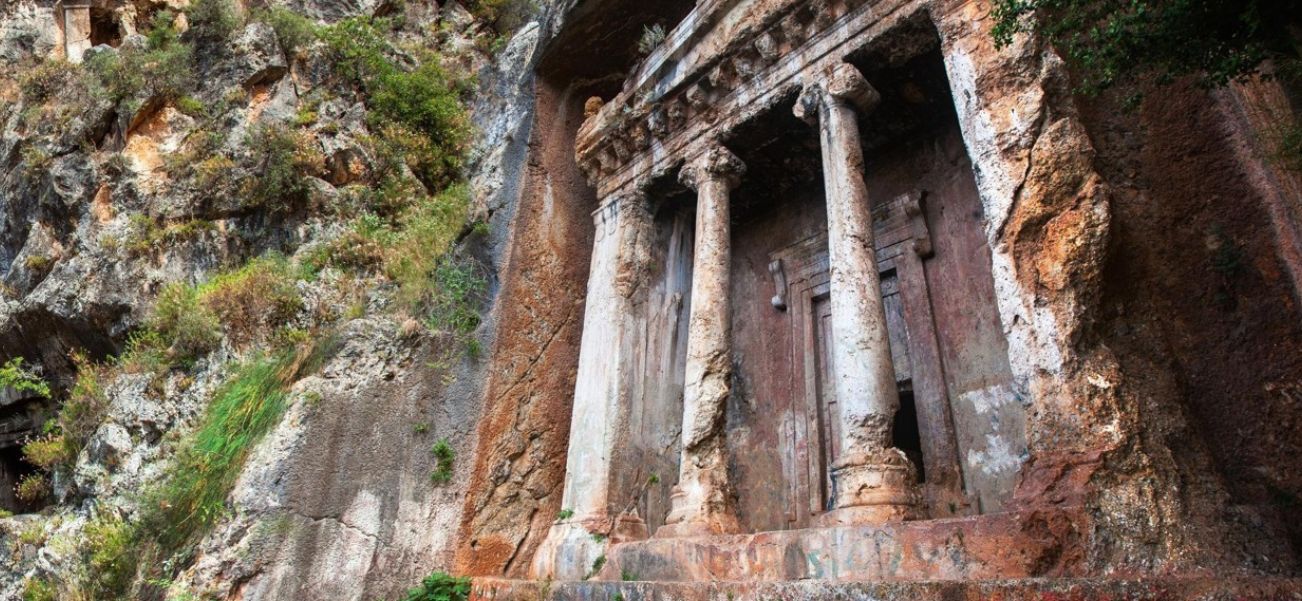
The most famous example of the temple-style is the Tomb of Amyntas in Fethiye, which is adorned with Ionic columns and bears a Greek inscription identifying the occupant as "Amyntas, son of Hermapias". Beyond these, the Lycians also constructed unique pillar tombs, most notably at the UNESCO World Heritage Site of Xanthos. These were tall, monolithic stone pillars with a burial chamber perched on top, elevating the deceased high above the ground. The Harpy Tomb and the Nereid Monument at Xanthos are prime examples of this style, blending Lycian form with Greek mythological sculpture.
The most compelling question surrounding these structures is: why place them on such inaccessible cliff faces? While no definitive archaeological evidence exists, local legend provides a beautiful and enduring answer. It is said that the Lycians believed winged creatures, or mythical siren-like beings, would descend to carry the souls of the dead to the afterlife. By building the tombs high on the cliffs, they were giving their departed a head start on this celestial journey. Scholars like Dr. Catherine Draycott of Durham University offer a more practical, though not mutually exclusive, theory. She suggests that visibility and status were key drivers. The tombs were designed to be seen. They dominated the landscape, asserting the power, wealth, and permanence of the elite families who commissioned them, creating a kind of "tomb competition" visible for miles around.
A Tour of the Major Tomb Sites
The Lycian coast is dotted with incredible sites, each offering a unique perspective on this ancient funerary tradition.
Fethiye (Ancient Telmessos): The Tomb of Amyntas
The port city of Fethiye, known in antiquity as Telmessos, is the most accessible starting point for any exploration of the Lycian Rock Tombs. High on the cliffs overlooking the modern city are the famous Amyntas Rock Tombs. Dating from the 4th century BCE, the tomb of Amyntas is the star of the show. You can pay a small entrance fee and climb the steps right up to its columned facade. While the interior is a simple, looted chamber with stone platforms where the dead once lay, the experience of standing before it and taking in the panoramic view of the Gulf of Fethiye is absolutely priceless.
Dalyan: The Kaunos Tombs
Perhaps the most photographed of all the tombs are those overlooking the Dalyan River. The Lycian Rock Tombs of Dalyan are part of the ancient city of Kaunos. The best, and most magical, way to see them is by taking a boat tour along the river. As you drift silently through the reeds, the massive temple facades carved into the sheer cliff face come into view, reflected in the calm water. This perspective not only provides the perfect photo opportunity but also mirrors how ancient mariners would have approached the city. The largest among them is known as the Kaunos Tomb, thought to be the resting place of a powerful Lycian leader.
Myra (Demre): The Home of Santa Claus
Further east, near the modern town of Demre, lies the ancient city of Myra. Here, a vast cliff face is honeycombed with numerous Lycian rock tombs, creating a striking visual effect. The necropolis stands above the ruins of a magnificent Roman theater. The tombs at Myra feature some of the most intricate relief carvings. Interestingly, Demre is also famous as the historical home of Saint Nicholas, the bishop who inspired the legend of Santa Claus. In a fascinating twist of history, a bulldozer operator in the area accidentally unearthed a Lycian rock tomb in 2017, connecting the ancient city of the dead with the modern city's most famous resident.
Hidden Gems: Tlos and Pinara
For the more adventurous traveler willing to venture off the beaten path, the sites of Tlos and Pinara offer a raw and uncrowded experience. At Tlos, another major Lycian city, the tombs are carved into the base of a massive acropolis hill that was inhabited for 4,000 years. The most significant is the Tomb of Bellerophon, named after a faded relief on its wall depicting the legendary hero riding the winged horse Pegasus. Further into the mountains lies Pinara, whose name means "round" in Lycian, a reference to its distinctive round acropolis. The first thing you see as you approach is staggering: a vertical cliff face riddled with hundreds of tombs, resembling a giant, ancient honeycomb. The sense of discovery here, wandering through pine forests amongst millennia-old stones with almost no one else around, is an experience like no other.
A Step-By-Step Guide to Visiting
Planning a visit to these magnificent sites is straightforward, and with a little preparation, you can have an unforgettable experience.
Best Time to Visit:
The ideal times to explore this region are during the spring (April to June) and autumn (September to November). During these months, the weather is pleasantly warm, the landscape is lush, and the crowds are smaller than in the peak summer season. Aim to visit the tombs either early in the morning or late in the afternoon. The "golden hour" light makes the stone carvings glow and creates dramatic shadows, which is perfect for photography and helps you avoid the intense midday heat.
How to Get There:
The main hub for the region is Dalaman Airport (DLM). From the airport, you can rent a car or take a shuttle to coastal towns like Fethiye, Dalyan, or Kaş.
- For Fethiye The tombs are within the city limits and easily reached by taxi or even on foot from the town center.
- For Dalyan You can take a dolmuş (minibus) to Dalyan town and then hire a boat from the riverbank to cruise past the tombs.
- For Myra/Demre These sites are best reached by rental car or as part of an organized tour along the coast.
Entrance Fees and Facilities:
Fees are generally modest. As of late 2024, entrance to sites like the Amyntas Tomb in Fethiye is around €3 (approximately $3.20 USD), while larger sites like Myra are around €13. It is always wise to carry cash (Turkish Lira or Euros), as not all sites accept credit cards. Facilities vary; major sites have ticket booths and information panels, while remote spots like Pinara have none, so you must come prepared.
Top Tips for Your Visit:
- Wear Proper Footwear This is non-negotiable. You will be walking on uneven ancient stone steps and rocky paths. Sturdy, closed-toe shoes with a good grip are essential for safety.
- Pack Essentials Bring plenty of water, sun protection (hat, sunscreen, sunglasses), and maybe a light snack. There is often limited shade.
- Bring a Torch/Flashlight Many of the tomb chambers are dark. Using the light on your phone or a small flashlight will allow you to see interior details and carvings.
- Allow Enough Time Don't rush. Sites like Pinara deserve at least 3-4 hours for a proper exploration, while Fethiye and Dalyan can be appreciated in 1-2 hours.
- Be a Responsible Traveler These are ancient, sacred, and often fragile sites. Admire the tombs from the designated paths, do not climb on the facades, and take only photographs. This helps preserve them for future generations.
Conclusion
The Lycian Rock Tombs are far more than just ancient graves. They are a profound statement of a civilization's beliefs, their social structures, and their artistic genius. From the easily accessible tomb of Amyntas in Fethiye to the remote, honeycombed cliffs of Pinara, these ancient necropolises offer a journey not just through the stunning landscape of the Turkish coast, but through time itself. They stand as a silent, majestic testament to the Lycians, a people who, in their quest for eternal rest, created one of the ancient world's most unforgettable sights. Whether you view them from a riverboat in Dalyan or stand before them on a cliffside, the experience is sure to be a highlight of any journey to Turkey.
Turkish Language Materials