


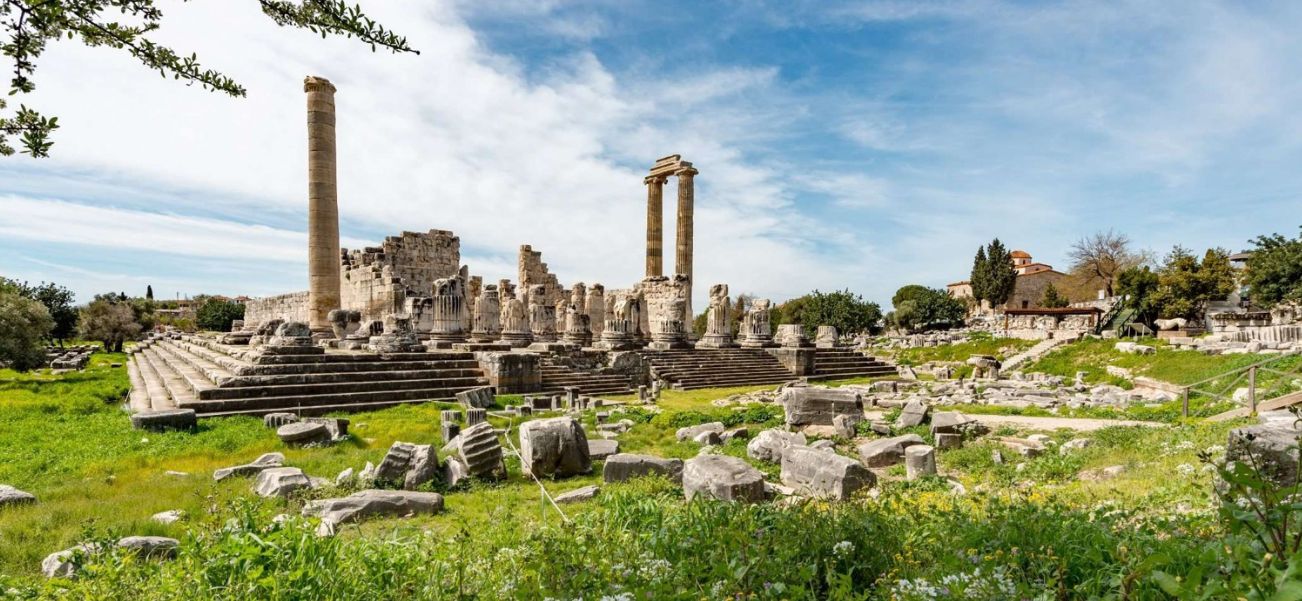
Unlocking the Mysteries of the Temple of Apollo, Didim, Turkey: The Sanctuary of the Oracle
Along the sun-drenched coast of southwestern Turkey, in the modern town of Didim, lies one of the ancient world’s most spectacular and enigmatic religious sanctuaries: the Temple of Apollo. Known locally as "Apollon Tapınağı" and historically as Didymaion, this site is not just another collection of ruins; it was once the second most important oracle and prophetic center in the ancient Greek world, rivaling the famed Oracle of Delphi.
Today, the Temple of Apollo at Didim stands as a testament to the ambition of Hellenistic architects and the enduring power of faith. With its towering columns dominating the skyline and intricate carvings whispering tales of gods and monsters, it offers visitors a profound journey back in time. Whether you are a history buff, a mythology enthusiast, or a traveler seeking the cultural treasures of the Aegean Region, this guide will unlock everything you need to know about this magnificent site.
TEMPLE OF APOLLO: THE SANCTUARY OF THE ORACLE IN DIDIM, TURKEY
UNESCO World Heritage Sites in Turkey
The Historical Significance of Didyma

To understand the temple, one must first understand its name and location. Didyma (Δίδυμα) was an ancient sanctuary, not a city, and its name comes from the Greek word for "twins," referring to the twin deities Apollo and Artemis. Although the site was sacred long before the Greeks arrived—possibly due to the presence of a sacred spring and the local Carian population—it became the religious heart of the powerful Ionian city of Miletus, located about 16 kilometers away.
The sanctuary was connected to Miletus by a Sacred Way, a 20-kilometer route along which processions would travel during religious festivals. Today, you can still visit the ruins of this holy road, though many of the original statues that lined it, dating to the 6th century BC, now reside in the British Museum.
Aphrodisias: Turkey's Hidden Marble Masterpiece
An Architectural Marvel of the Hellenistic World

The Temple of Apollo you see today is actually the third iteration built on this site. The original archaic temple was destroyed by the Persians in 494 BC, who also silenced the oracle and carted off the bronze cult statue of Apollo. It wasn't until Alexander the Great conquered the region in 334 BC that the sanctuary was revived, and construction began on the colossal new structure that dominates the site today.
The ambition of this project was staggering.
- Size and Scale The temple is one of the largest ever built in the Hellenic world. It is a dipteral temple, meaning it was surrounded by a double row of columns. It originally boasted 122 columns, just five fewer than the Temple of Artemis at Ephesus (one of the Seven Wonders of the Ancient World), making it the third-largest temple of antiquity.
- The Standing Columns Today, only three of these massive columns remain standing (re-erected during excavations), but they offer a powerful sense of the building's original scale. They stand approximately 20 meters (60 feet) high, with intricately carved bases typical of the Ionic order.
- The Unfinished Wonder Interestingly, the temple was never actually finished. Archaeologists have noted that some of the column drums lack fluting, and the walls were never polished. Despite this, or perhaps because of it, the site offers a unique "behind-the-scenes" look at ancient construction techniques.
A Journey Through The Most Famous Places in Turkey
The Oracle and the Inner Sanctum

What truly set Didyma apart was its function as an oracle. Unlike typical temples where the public could worship, access here was highly restricted. The design of the temple reflects this mystical purpose.
The building features a unique layout. Visitors would enter from the front porch ("pronaos") but could go no further. Instead, they would climb a steep set of stairs to the "chresmographeion", a room where the oracle's prophecies were inscribed and delivered.
To reach the inner sanctum ("cella" or "naos") where the oracle herself worked, one had to descend through two sloping, vaulted tunnels ("the labyrinth"). This inner courtyard was hypaethral (open to the sky) and contained the sacred spring and a laurel tree. Here, the priestess (known as the Prophetess) would sit, drink from the spring, and deliver her prophecies, which were then interpreted by the priests.
The Mythological Guardians: Medusa and the Gorgons

As you wander through the ruins, you will encounter one of the most photographed pieces of the site: the head of Medusa. This striking relief, one of three Gorgon sisters, was part of the temple's frieze. In Greek mythology, Medusa was a terrifying figure with snakes for hair, capable of turning anyone who looked at her into stone.
The Greeks often placed her image on temples and shields as a protective symbol, an apotropaic device to ward off evil. The Medusa head at the Temple of Apollo is unique; it features a slit in the middle of her face and has become one of the enduring symbols of Didim. Look closely at the massive blocks scattered around the site, and you will also see beautifully carved meander patterns (the Greek key design) and intricate floral motifs.
Visiting the Temple of Apollo: A Practical Guide

Planning a visit to this archaeological wonder is essential to making the most of your trip.
Location and How to Get There
The ruins are located in the Hisar neighborhood of modern Didim, in Aydın Province.
- By Car It is easily accessible via the D525 highway. The site is well-signposted.
- By Public Transport From Didim town center or the popular resort of Altinkum, you can take the local No. 4 bus, which drops you a short walk from the entrance. Taxis and "dolmuş (shared minibuses)" are also readily available.
Best Time to Visit The Temple of Apollo

The site is open year-round, typically from 08:30 to 17:00 (though hours may extend in summer), but timing is everything.
- Golden Hour For photographers, the sunset is magical. The low light casts a warm glow on the stone columns, making for spectacular shots.
- Avoid the Heat Summers in Turkey can be scorching. Visit during spring (April-May) or autumn (September-October) for mild weather, or plan your day for early morning or late afternoon to avoid the midday sun and crowds.
Entrance Fees and Facilities
- Tickets The entrance fee is generally affordable (recently cited as around 200 TL or approximately 6 Euro, but always check the current rate). The Müzekart is valid for Turkish citizens.
- Facilities There are cafes, small shops, and restaurants just outside the gates where you can enjoy a coffee or a meal with a view of the ruins. Note that there is limited shade inside the site itself, so bring water, a hat, and sunscreen.
The Visitor Experience
One of the most praised aspects of the Temple of Apollo is the freedom it offers. Unlike some sites that keep visitors at a distance, here you can walk right up to the massive columns, wander through the vaulted tunnels, and touch the ancient stones. This tangible connection to the past is what makes a visit so memorable.
What to See Nearby
The Temple of Apollo is part of a rich tapestry of ancient history in the region.
- Miletus Just a short drive away, visit the ruins of Miletus, the powerful city that once controlled the sanctuary. Its well-preserved theater is a must-see.
- Priene Perched on the slopes of Mount Mykale, this Hellenistic city offers a stunning view and a beautifully laid-out grid plan.
- Bafa Lake (Lake Bafa) Located inland, this serene lake (once a gulf of the Aegean) is surrounded by striking mountains and dotted with Byzantine monasteries. It is also an ideal spot for bird watching.
Preservation and The Future
The site continues to be a focus of archaeological work. Excavations began in earnest between 1906 and 1913 by German archaeologists and continue to this day under the direction of experts like Professor Helga Bumke from Berlin Halle University . Recent restoration projects have focused on preserving the three standing columns, ensuring that they will stand for another 2,300 years. These efforts allow visitors to witness history being preserved in real-time.
Conclusion
The Temple of Apollo in Didim, Turkey, is far more than a pile of old stones. It is a place where mythology breathes, where the echoes of ancient pilgrims asking for guidance can almost be heard, and where the ambition of ancient architects reaches for the sky. From the fearsome gaze of Medusa to the serene beauty of the surviving columns, this site offers an unforgettable experience. Whether you are drawn by the call of the oracle, the allure of Hellenistic art, or simply the beauty of the Turkish coast, the Temple of Apollo awaits to share its timeless secrets.
Turkish Language Materials